Journal

In an age where AI can make it, why does the human eye sell higher?

In an age where AI can make it, why does the human eye sell higher?

AI can produce more than ever. That is exactly why the eye that selects, edits, and stops becomes more valuable.

AI has changed the speed of making.

One image. Another variation. A new tone. A different composition. A revised sentence.

What used to take hours can now appear in minutes. That is power.

But as the number of things we can make increases, value slowly moves away from the ability to make itself.

The question becomes: what do you choose, what do you remove, where do you stop, and which small discomfort do you refuse to ignore?

The more AI increases volume, the more value moves toward the eye.

People are not only looking at skill. They are looking at selection.

AI can produce many things that look good. But something that looks good is not always something a brand should use.

A beautiful image, a clean composition, a luxury-like mood, a usable line of copy: these can all be generated. But a brand that wants to sell higher needs a narrower judgement.

A little too loud. A little too cheap. A little too familiar. A little too close.

That slight difference is where price is protected.
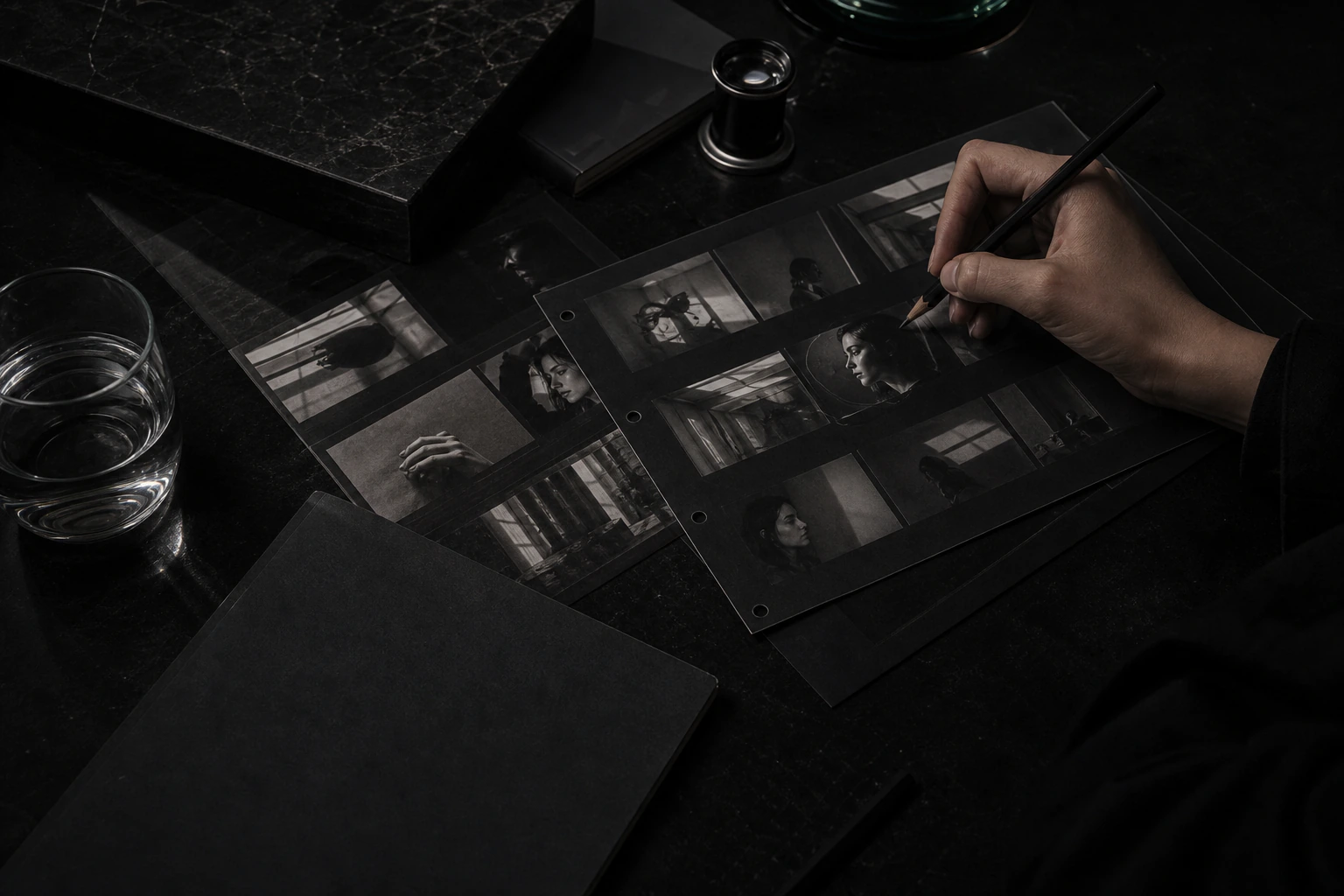
The human eye catches discomfort

AI often gives something that looks correct. But brand value is not lowered only by obvious failure.

A gaze can be slightly weak. The light can feel slightly shallow. The texture can be slightly light. The words can come slightly too close.

People feel these things even when they cannot explain them.

The eye does not only choose the right answer. It stops the details that lower value.

That eye is not simply taste. It is the ability to see what makes a brand stronger, what makes it cheaper, and what should not be allowed into the surface.

The difference appears after output

Using AI is no longer rare. The difference appears after the output.

Which direction remains? Which visual is not mixed in? How far is enough? Where should the work stop?

Good AI use is not showing everything that was generated. It is narrowing the possibilities until the brand becomes sharper.

Speed needs judgement

AI speed is attractive. But speed alone does not sell higher, because many people can become fast.

When speed becomes normal, the quality of judgement is what remains visible.

The strongest process is often this: make quickly, then look slowly.

AI makes quickly. The human eye slowly chooses only what still carries value.

A valuable eye knows how to stop

More impact. More explanation. More material. More clarity.

The desire to add is natural. But brand price often breaks there.

Stop before it becomes too loud. Stop before it explains too much. Stop before it shows everything.

AI proposes. The human eye refuses. That refusal is where art direction becomes visible.

What KHZ ART looks at

KHZ ART does not only look at what AI can create.

We look at whether the expression makes the brand feel more valuable, reaches the people it should reach, avoids cheapness, and connects image, film, web, words, and flow under one judgement.

AI can make production faster. But brand value is not decided by speed alone.

The eye that sees, selects, stops, and leaves the final shape is what turns AI from a generator into a brand tool.

In closing

In an age where AI can make almost anything, the human eye does not become old.

It becomes more valuable.

The more options appear, the harder selection becomes. The more polished outputs exist, the more a small discomfort can lower price.

Making is the entrance. Seeing is the value.

Read next
What a brand should decide before shooting or web production
The customer you want is decided by the first image
Contact

Turn AI into expression that does not look cheap.

KHZ ART directs the selection after generation across image, film, web, words, and flow.

Talk to us on LINE