Journal

Logo Renewal: If a Customer Asks "When Did That Change?", It Worked

Logo Renewal: If a Customer Asks

Before the shop opens, lay every object that carries the old logo out on the workbench. The paper bags, the shop cards, the stamp by the register, the curtain over the door, the gift boxes. When you start thinking about a logo renewal, count these before you draw a single new line. Whether a renewal works depends far less on how good the new mark is than on when, and in what order, the things on that bench get replaced.

The day the new logo is settled is not the end. It is the beginning. What follows is a stretch of days spent swapping out the objects on the bench, one by one.

This piece walks through a logo renewal for a small shop or a one-person business in three parts: before you draw, the day you switch, and after the switch. By the end, you should be able to say how many objects your shop will need to replace, and when you can be finished, before you ever speak to a designer.

The First Line to Write in a Logo Renewal

The first thing to write is not a sketch of the new logo. It is one sentence: the reason to change. "It looks dated" is not enough. What, exactly, looks dated? Is it unreadable when printed small? Has what you sell changed until the name no longer fits? Has a shop with a similar mark opened on the same street?

Once the reason fits in one sentence, the place to change narrows to one as well. If it is unreadable, you fix the letterforms. If the products changed, you fix what the mark means. If a neighbour looks too similar, you move one thing, a colour or a shape, away from them. A large company's logo renewal follows the same order.

Start drawing without that sentence and you will want to change everything a little. A logo where everything changed a little almost always looks weaker than the one before.

If you cannot say in one sentence why the logo should change, it is not yet time to change it.
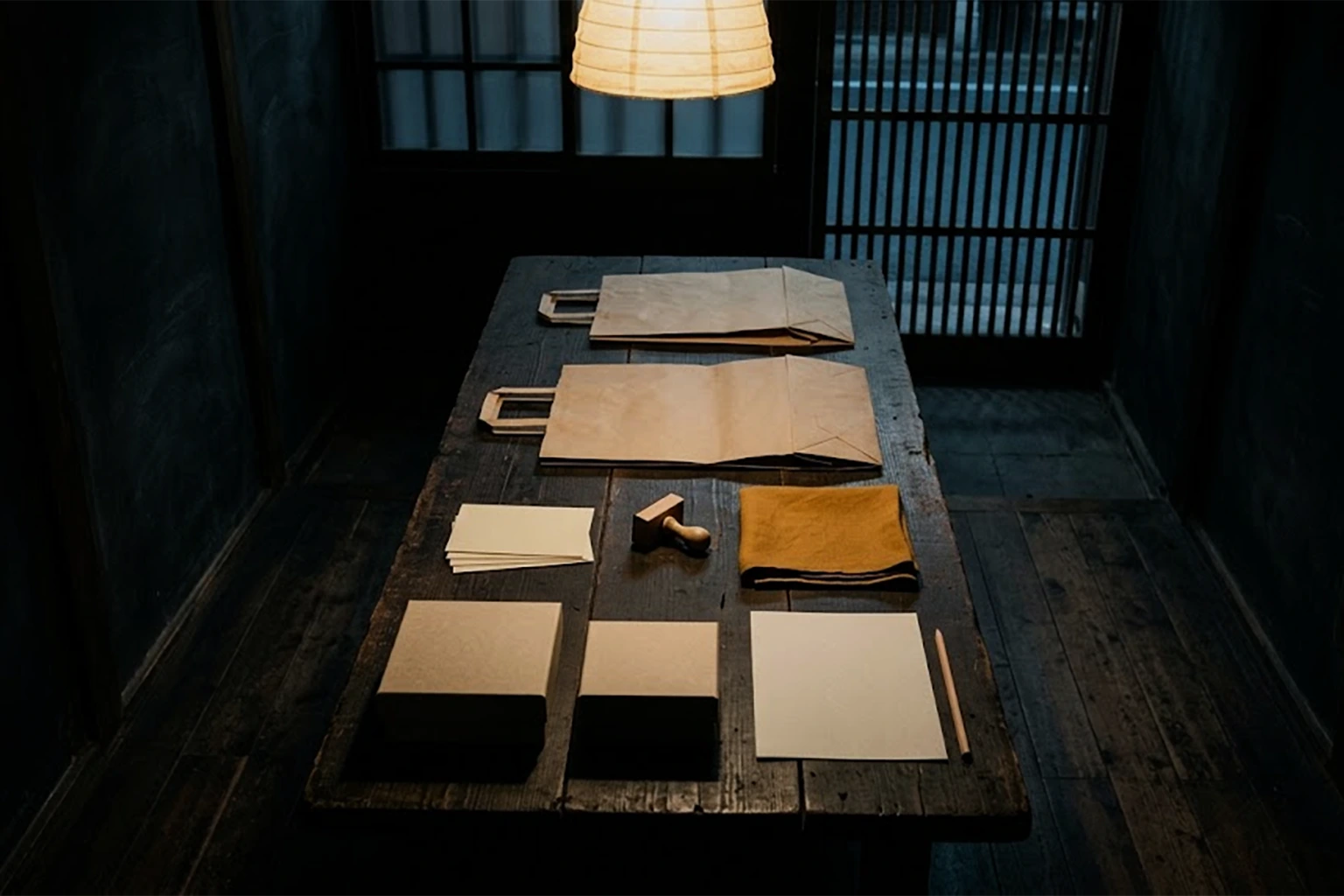
Plain kraft bags, cream cards, a wooden stamp, a folded saffron cloth, two plain boxes and a blank sheet with a pencil, laid in three rows on the bench

Logo Change Failures Run in Two Directions

Nearly every failed logo change falls into one of two kinds.

The first is the change nobody notices. The line got slightly thinner, the corners slightly rounder, the colour slightly brighter. To the person who drew it, the difference is enormous. To customers, it is the same logo. You paid to reprint the cards and the bags, and nothing happened.

The second is the change that makes you look like a different shop. Colour, shape and lettering, all replaced at once. Regulars walk straight past the sign. The social media icon changes, and followers no longer know whose post they are looking at.

The two failures sit at opposite ends. So in a logo renewal, you limit the change to one place. Change the colour and keep the shape. Change the lettering and keep the colour. Change one thing boldly, and people notice, while still knowing it is you. Which one thing? The sentence you wrote first already holds the answer.

A plain saffron noren with no crest or lettering hanging in the dark shop entrance, the street glow showing through the lattice door

What Successful Logo Changes Share: a Finish Date

Look closely at logo changes that worked, and before the quality of the mark, you notice they all had a date by which everything would be replaced.

Go back to the workbench. There is still stock of the old paper bags. A new stamp takes two weeks to arrive after you order it. A dyed curtain takes a month. The photos on your map listing will not change until you take new ones yourself.

Leave those gaps alone and the old logo and the new one sit side by side for three months, or six. A new shop card goes into a bag with the old logo on it. Which one is the face of this shop? The customer cannot tell.

Renewals that succeed build this backwards. Order the slowest object first, call the day everything is in hand the switch day, and replace it all at once on that day. Anything that cannot make it simply goes without a logo until then. If old bags remain, plain unmarked bags can fill in for a while.

A logo renewal does not end on the day the new logo is chosen. It ends on the day the old one disappears.
A woman in profile by the lattice door, eyes lowered, in a black coat and saffron apron, the edge of a plain curtain at the right

A Company's Logo Renewal and a Small Shop's Are Not the Same Job

When a large company renews its logo and it makes the news, signs, packaging and apps around the world change on the same day. That is possible because preparation began years earlier, with a list of things to replace running to hundreds of lines, and reprints stacked up towards that one date.

A small shop does the same work with one person, or a few. The person who writes the list, the person who places the orders and the person who checks them are all the same person. Copy the company and start from the announcement, and you will usually run out of hands.

What suits a small shop is to count backwards from the finish date, not forwards from an announcement. There are far fewer objects to count than a company has. But replacing each one weighs far more heavily. Writing everything down while the list is still short is the small shop's greatest advantage.

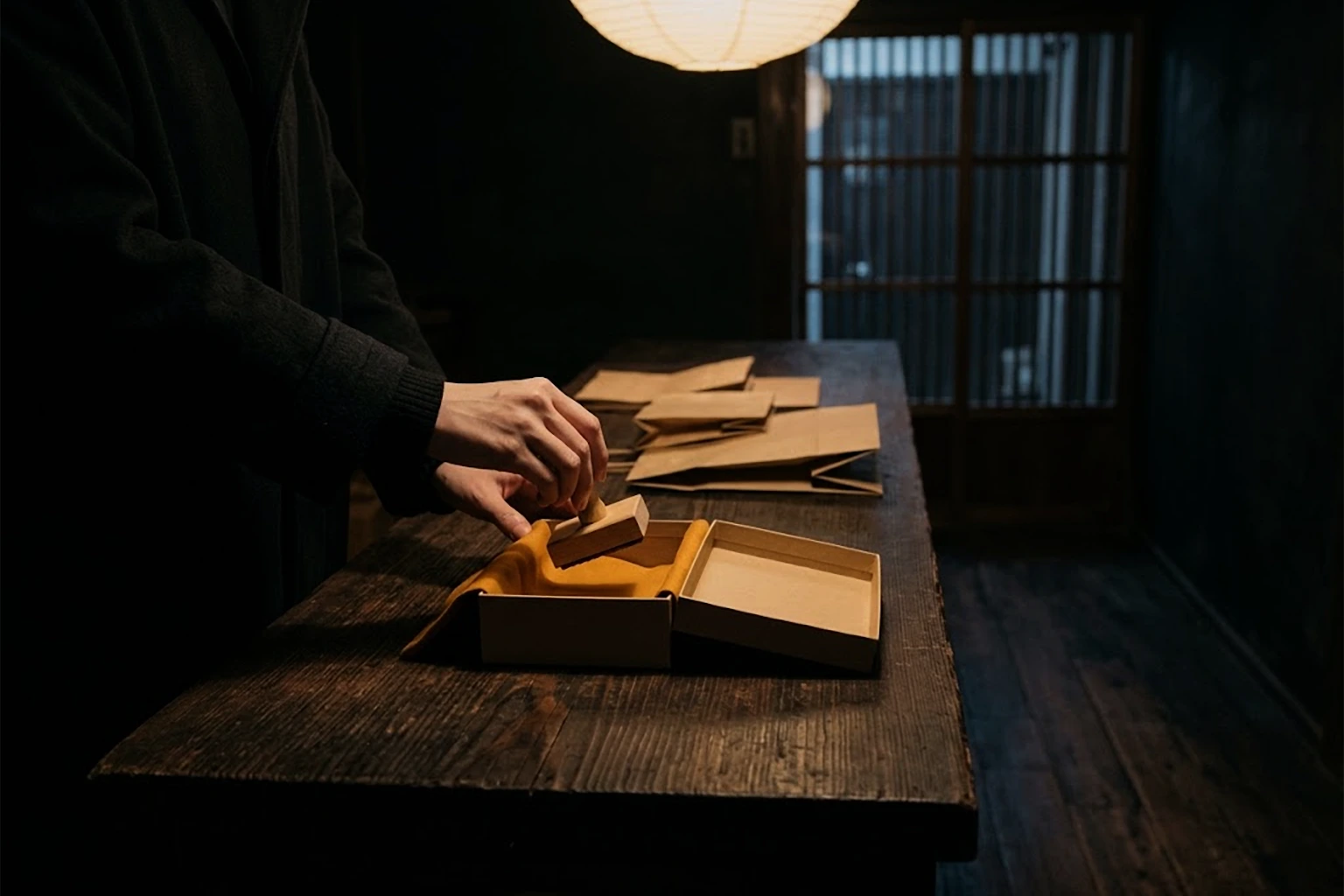
Hands lowering a plain wooden stamp into a box lined with saffron cloth, folded paper bags out of focus behind

The Most Common Thing Left Behind in Logo Renewal Examples

In a small shop's logo renewal, the place things get left behind most often is the screen. Places like these:

The Instagram icon. The photos and logo on your map listing. The shop image on booking and online store platforms. Your email signature. The templates for invoices and quotes. The icon on your messaging account. The top of your website, and the small mark that appears in the browser tab.

Unlike paper, nothing on a screen costs money to reprint. Which is exactly why nobody checks whether it changed. Six months after the switch, one small image in the search results is still the old one. It happens all the time.

So the list of objects on the bench includes the screen too. Paper things, cloth and wood things, things on a screen. Count them in three columns and nothing gets left behind. Even for a small shop, the total usually passes twenty.

Announce a Logo Renewal Once, on the Day You Switch

Announce the logo renewal once, on the day you switch. Most shops do not need a preview beforehand. Announce early, and every time someone sees the old logo, they think: still not changed.

The announcement needs three things. When it changed. What changed, and what did not. Why, in one line. The reason you wrote at the very start can be used here exactly as it is.

And then, back to the question in the title. Some time after the switch, if a customer asks, "When did that change?", the renewal worked. They noticed something changed. And they are asking because they know it is the same shop. You are standing exactly between the change nobody notices and the change that makes you a stranger.

A new logo should change on every page at once. If the logo sits in one shared component that every page reads, the swap happens in one step. Framer works that way. You can start on the free plan; connecting your own domain needs a paid plan.

See Framer (affiliate link, advertisement)

"When did that change?" is the sign that both reached them: what changed, and what did not.

Bring the List You Counted

When you ask for a logo renewal, show the list you counted on the workbench before you talk about which new logo you like. Paper things, cloth and wood things, things on a screen. How many of each, and which one takes longest.

With the list in hand, the design side can work out from the start which single change will still read as the same shop everywhere. Does it read at the size of an Instagram icon? Does the colour hold on dyed cloth? Do the lines survive stamp ink? Knowing every place the logo will appear before drawing it is the shortest way there.

At KHZ ART, we design logos for small shops and independent businesses as one continuous system, from the mark to the colour to the typeface. For a renewal, send us the shop's name and the count on your list, and we will decide the rest together from there.

Read next
How to Approach a Website Renewal: Decide What Stays Before You Rebuild
Branding Costs for Independent Businesses: Decide the Scope Before the Budget
What to decide before outsourcing art direction
Behind the 5.0 Star Rating: The Clients I Silently Refused.
All Articles
Logo Design

Start your logo renewal from the list you counted.

Send us the shop's name and how many objects need replacing, and we will begin from the one place to change. Tell us about your brand — we usually reply within 2–3 business days.

Start the Conversation