Journal

In an age of AI mass production, what do chosen brands discard?

In an age of AI mass production, what do chosen brands discard?

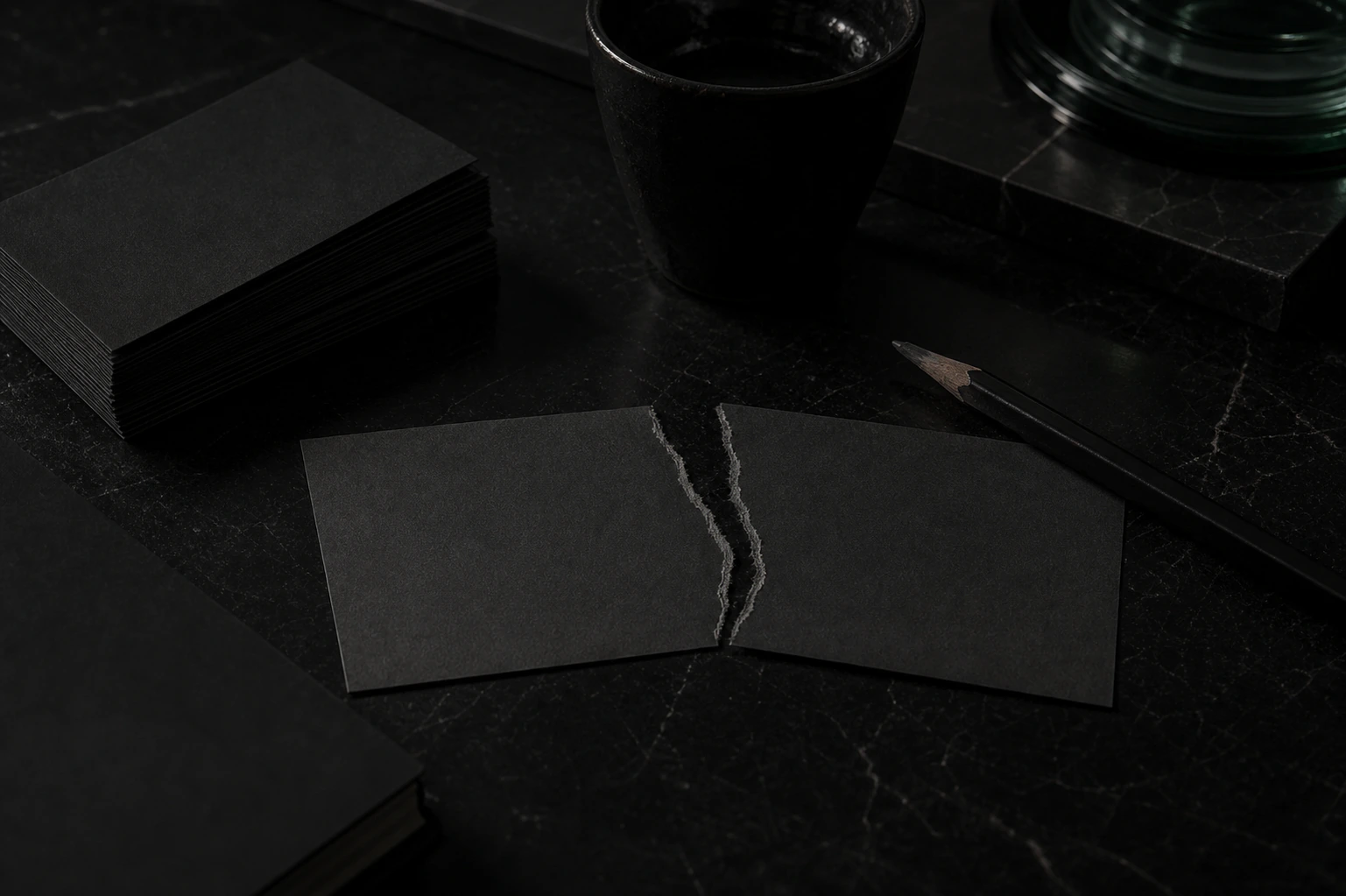
When more can be made, a brand is judged less by what it adds and more by what it refuses to keep.

AI has changed the volume of making.

One image. Ten lines of copy. Another composition. Another tone. A different world in seconds.

This is useful. But the moment production becomes easy, value moves somewhere else.

Being able to make is no longer enough. Polished images, clean text, and convincing websites will keep multiplying.

In that field, the brands that remain are not only defined by what they publish. They are defined by what they refuse to publish.

Chosen brands discard before they add.

Discarding may sound cold. But here it does not mean shrinking possibility. It means closing the entrances that weaken price.

Generic words. Images that could belong to anyone. Explanations that feel too useful. Decoration that makes a brand look safer and cheaper at the same time.

Chosen brands notice those small losses. They do not show everything. They do not explain everything. They do not keep every option.

First, discard the desire to be liked by everyone

The danger in an age of abundance is not the number of options. It is the desire to keep them all.

A little brighter. A little clearer. A little friendlier. A little more sellable.

Each adjustment may look correct. Together, they make the brand belong to no one.

Strong brands do not make the entrance endlessly wide. They leave a little distance, a little silence, a little room for the right person to return.
Then, discard the comfort of over-explaining

Explanation matters. But too much explanation can erase the aftertaste of a brand.

Why it is special. Why people choose it. How it is different. What it cares about.

When everything is placed at the front, the viewer becomes tired before they become interested.

To discard is not to reduce possibility. It is to leave only the conditions that protect value.

The strongest brands often place atmosphere first, then texture, then proof. In that order, explanation becomes trust instead of pressure.

The difference appears after AI output

Using AI is no longer rare. The meaningful part is what happens after output.

Make one hundred images. Do not use ninety. Remove six more. Decide the final crop. Decide what not to mix in.

That is where brand class appears.

AI expands possibility. The human eye narrows it. If narrowing feels dangerous, expression becomes a collection of materials instead of a world.

A brand world is decided not by the amount placed into it, but by the precision of what was left outside.

Discarding leaves space in memory

Memorable brands do not make the viewer remember everything. They reduce the experience until only the necessary shape remains.

A dark space. One sentence. One image. One clear route. A button that does not beg for attention.

People do not remember everything. That is why only what must be remembered should remain.

In an age of AI mass production, the difference is not the number made. It is the few things left standing.

What KHZ ART discards

KHZ ART does not only remove elements. We remove the kinds of kindness that make a brand look cheap.

Familiar luxury. Noisy strength. Explanatory images. Words that try too hard. Flows that reassure so much they blur the outline.

Across image, film, web, and language, the question is always the same.

What should this brand not show? What should it not say? What should be removed so the right person remains?

In closing

In an age of AI mass production, making is only the entrance.

Value comes after that.

What to use. What not to use. What not to say. Where to stop.

Chosen brands are not simply visible. They leave enough space for the right viewer to return.

Read next
Memorable AI expression is decided not by what you add, but by what you erase
Chosen brands are defined by what they refuse
Contact

Before adding, define what to discard.

KHZ ART directs selection, refusal, and brand atmosphere across image, film, web, and words.

Talk to us on LINE