Journal

Film Production Cost Breakdown: Start at ¥35,000 for Thirty Seconds, Then Add One Line at a Time

Film Production Cost Breakdown: Start at ¥35,000 for Thirty Seconds, Then Add One Line at a Time

We finished a thirty-second film in landscape, dropped it into the upright frame of a phone, and the face of the woman walking towards camera was simply gone, somewhere off the edge of the screen.

Read a film production cost breakdown line by line and you find the money gathers in exactly these moments: the moments when something has to be placed again, somewhere else.

In an upright frame, the figure is pulled back to the centre, the type is set again, and a hand that got cut off is swapped for a different shot. It is still one film. The work, though, has quietly doubled.

This piece builds up KHZ ART's film pricing from a single thirty-second piece, one line at a time. Every number here is one we publish on our site. By the end, you should be able to say which line of your own brief is likely to swell, before you ever ask for a quote.

A Film Production Cost Breakdown Is Set by the Number of Lines, Not the Running Time

It is natural to assume film cost follows length. Sixty seconds costs more than thirty, and that isn't wrong. But two films of the same thirty seconds can end up almost twice apart. What changed was not the length. It was the number of lines on the quote.

Three questions decide those lines. Where will it run? Who will see it, and in which language? When do you need it? Each answer adds a line, or takes one away.

A quote moves with the number of questions answered, not the length of the film.
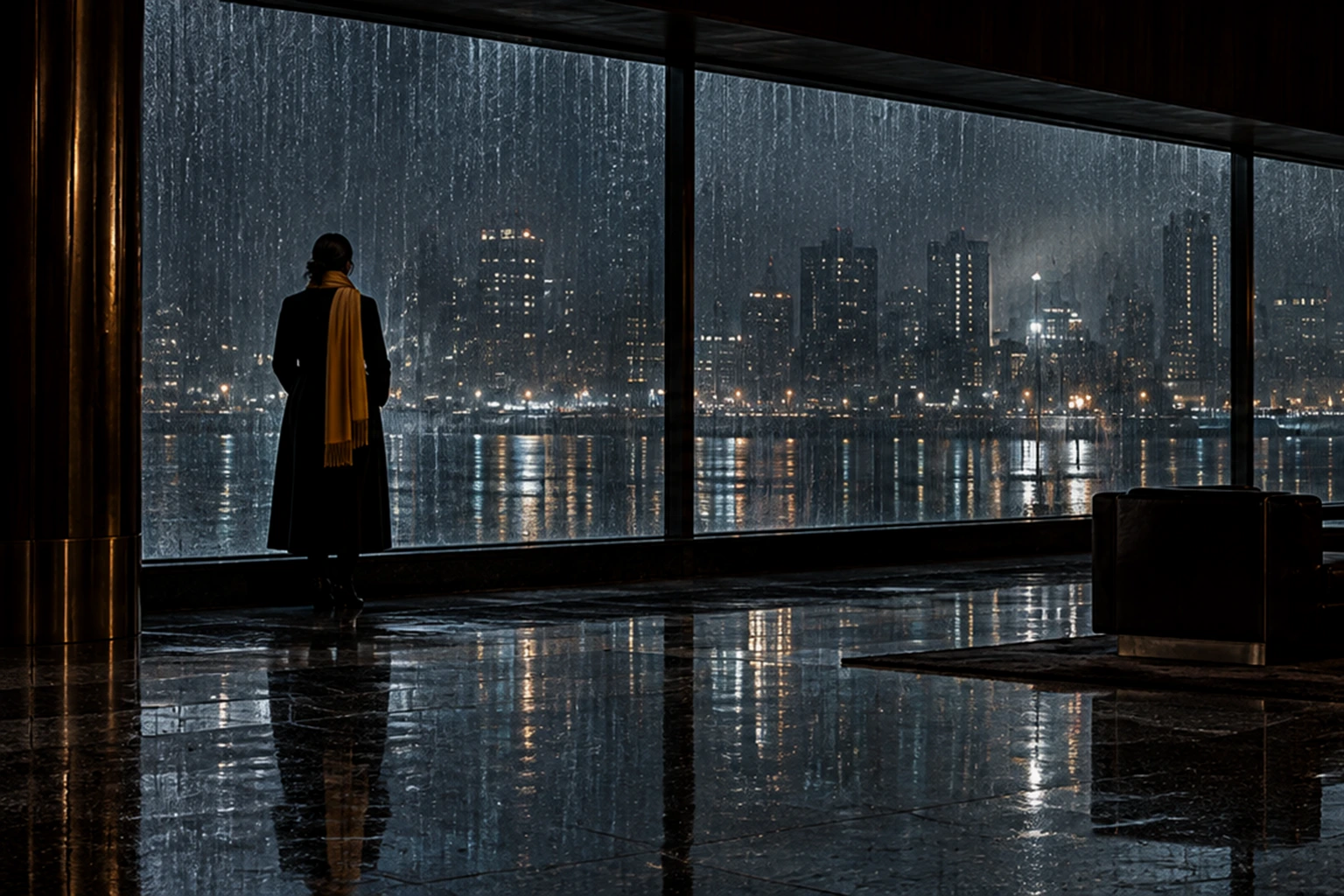
A very wide shot of a long rain-streaked window, a small figure in a black coat standing at its far left end, seen from behind

Reading a Film Production Price List from One Thirty-Second Piece

A thirty-second film from KHZ ART starts at ¥35,000, with a shortest turnaround of five days. That includes the structure proposal, the world design and a soundtrack. Add nothing, and that is your working total.

There are six lines you can add. An original score: ¥10,000. Subtitles in more than one language: ¥5,000. A vertical cut for social: ¥5,000. A forty-eight-hour rush: ¥10,000. Each revision from the third onwards: ¥15,000. A non-public arrangement, where the film never appears in our portfolio: ¥10,000.

Add all six and one extra revision and you reach ¥90,000. Almost no brief needs all of them. What matters is sorting out, before anything starts, which lines your project genuinely needs.

Count the lines on two briefs.

The first is a thirty-second launch film that should also run as an Instagram Reel. The only line to add is the vertical cut, ¥5,000. The soundtrack is already included, so the working total is ¥40,000, five days at the shortest.

The second is the same thirty seconds, but it also has to be shown to partners abroad. Multilingual subtitles add ¥5,000. If the presentation date is fixed and five days is too long, the rush adds ¥10,000. If the brand wants a piece of music written only for it, the original score adds ¥10,000. That comes to ¥65,000, and the running time has not changed by a second.

The gap between the two is ¥25,000. It comes from the number of answers to where, who and by when, not from the length of the film.

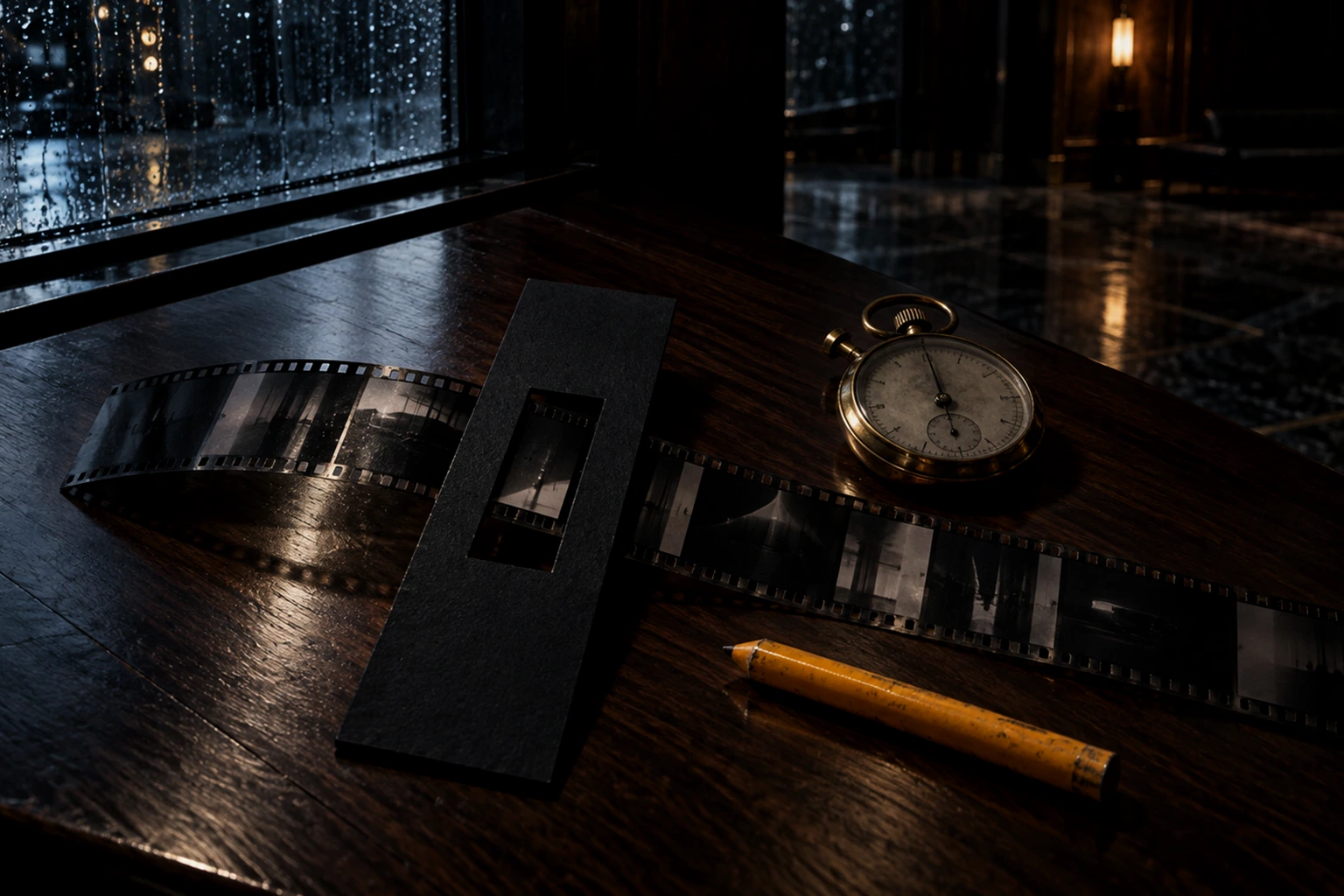
A still life on a walnut desk: a strip of 35mm film, a black card mask with an upright window cut in it, a brass stopwatch and a saffron grease pencil

Social Media Video Production Cost Grows with the Rebuild for Vertical

A vertical cut for social is ¥5,000. As a line it looks small, but the work inside it is more than changing an export setting.

A person and a product placed left and right in a landscape frame will not both fit in an upright one. So for every shot we decide again what stays, move the type up or down, and replace any movement that would slide out of frame with a different shot. The film at the start of this piece, the one with the missing face, was a film that never had that rebuild.

If you already know the film will run on social, we lay a vertical frame over the composition from the first day. The rebuild then stays small, and the landscape and vertical versions look like one film. Ask for vertical afterwards, and the vertical version tends to look like a different film altogether.

An upright frame only settles neatly on a film that was framed for it from the start.
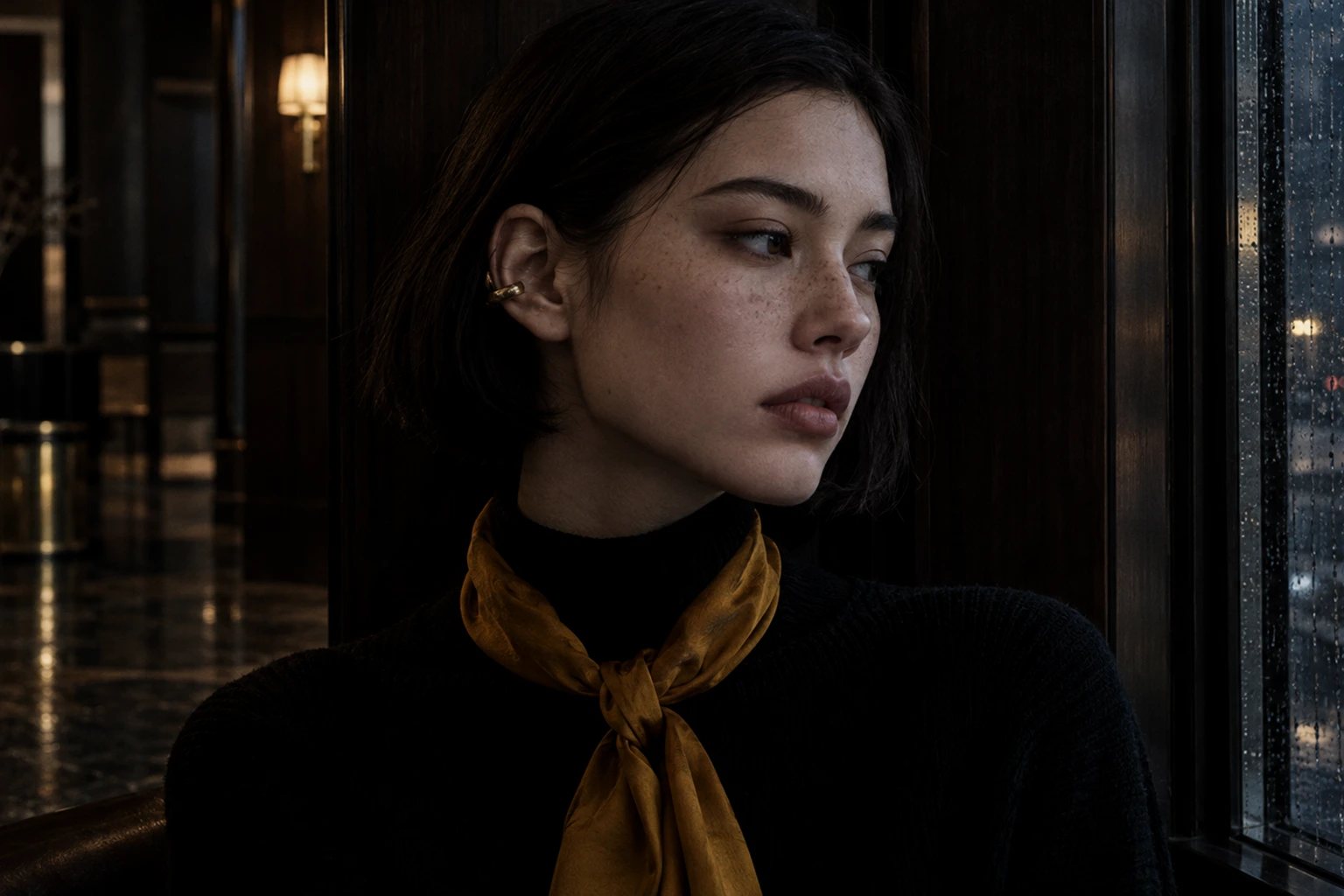
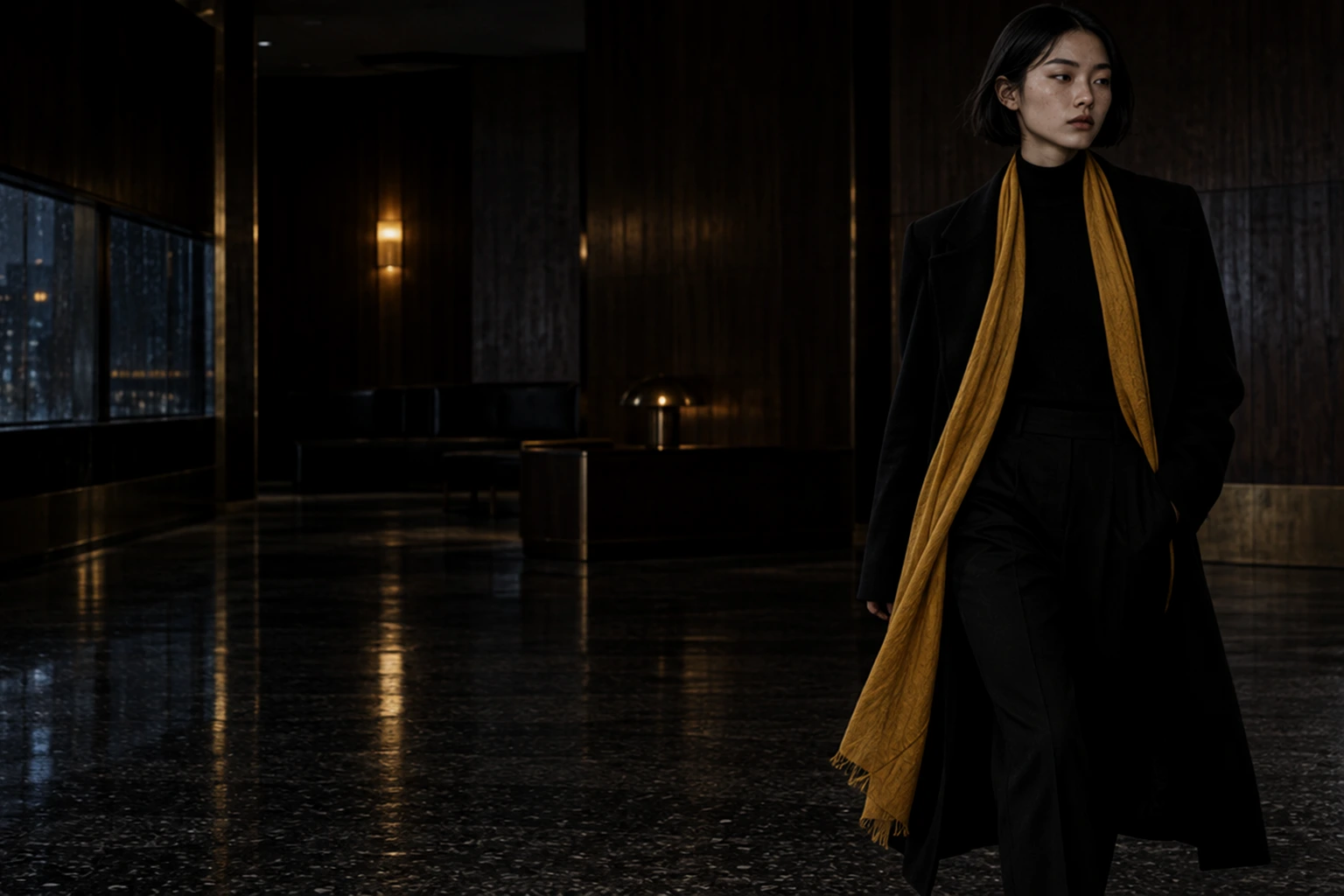
A close crop composed for an upright frame: a woman in profile in a black high-neck knit, a saffron scarf knotted at the throat

AI Video Production Cost: What Gets Cheaper and What Doesn't

KHZ ART makes its films with generative AI. Using AI removes location bookings, camera hire and days spent waiting for the weather. That is why we can take on a thirty-second film from ¥35,000.

Some things AI does not reduce. Deciding what world the film should look like. Choosing, out of many generated candidates, the shots that make one continuous piece. Fitting the sound to the picture. These are done by human eyes and hands, and they take the time they take.

With AI video, making is cheap, so choosing happens more often. What moves the cost is less the volume generated than whether the criteria for choosing were settled before the work began.

Criteria can be short rules: the light only from the last hour before dusk; the face never shown until the final shot. With three or four of these in place, comparing candidates gets much faster. Without them, every candidate looks perfectly fine, and the choosing never ends.

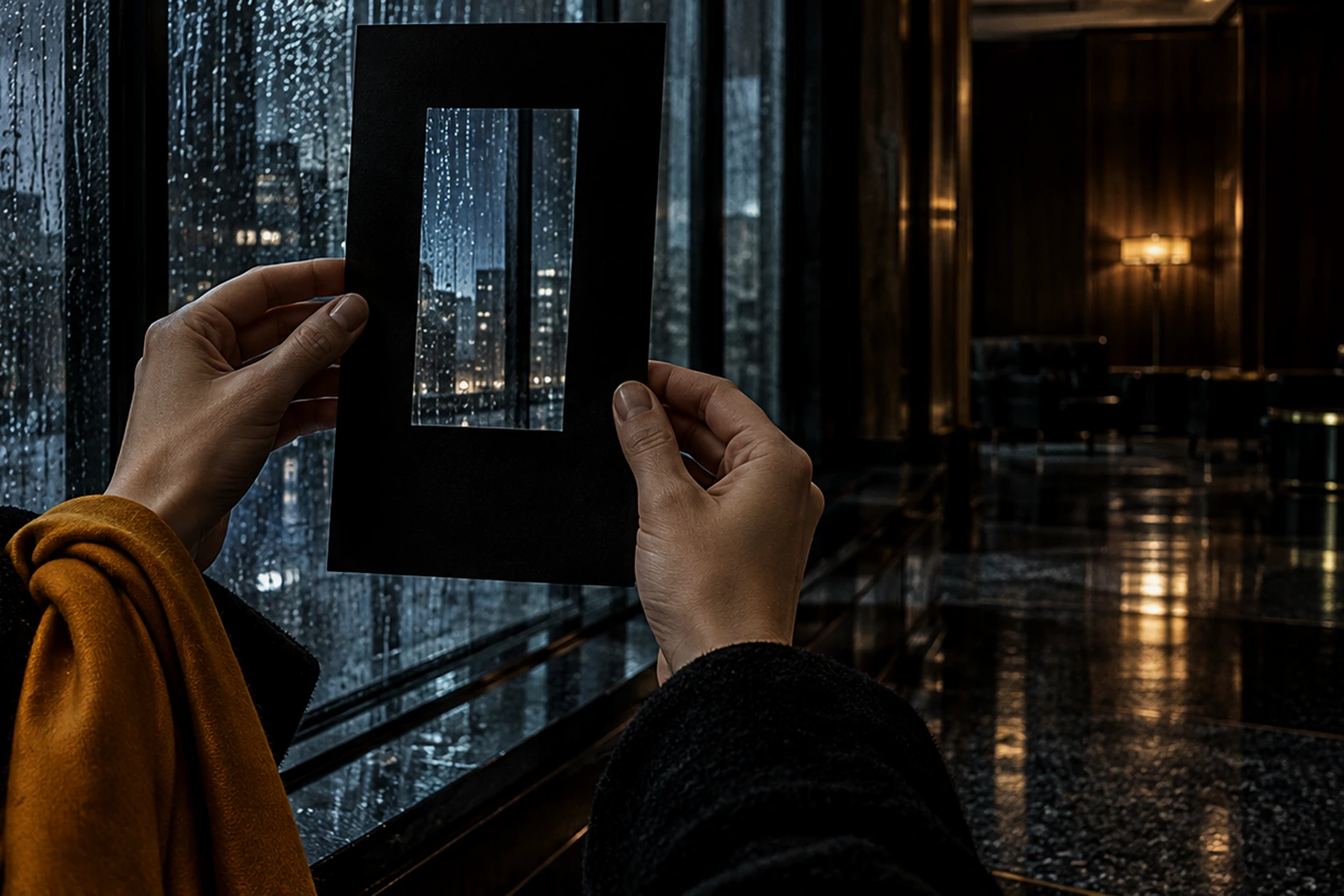
Hands raising a black card mask with an upright window against the rainy glass, testing a vertical frame

The Cost of Outsourcing Video Production Changes in the First Ten Minutes

When an outsourced film comes in over its quote, the most common reason is revisions. At KHZ ART, minor adjustments are free up to two rounds, and each round from the third is ¥15,000. A major change of direction is quoted separately.

Projects that reach a third revision tend to share one thing. What is being changed is no longer a colour or the position of a line of type. It is "make the mood brighter" or "we want it to speak to a younger audience": decisions that belonged at the very beginning.

A third revision is usually a question that could have been answered in the first ten minutes.

So we decide in advance what we ask at the start of every conversation. Who should see it. Where it will run. Whether there is a film you want to refer to. What it should not show. When those four have answers, revisions usually stay inside the two free rounds.

The non-public arrangement (¥10,000) is another line best decided at the start. If the film shows a collection before its release, or carries the name of a partner, tell us at the beginning. Switching to non-public halfway adds another round of checking how the work can be shown.

We have written about how revision fees work in more detail in our piece on design revision costs.

If you want to know which line of your own brief will swell, the quickest way is to add them up. Our film production cost simulator (in Japanese) shows a working total and the shortest turnaround as soon as you select the items. No sign-up, no enquiry needed.

What it shows is the sum of each item's price, a guide rather than a quote. We quote each project individually, depending on length, structure and how deep the direction goes. You can bring the number it gives you straight to a conversation with us.

Once You Have a Total, Mark Three Lines

When the simulator gives you a total, mark three lines before you close it.

First, the lines you added because the film will run in more places. Second, the lines you added to go faster. Third, the lines you added just in case, for things that haven't been decided yet.

The first two have clear reasons, so they barely move. If the places and the date are settled, keep those lines without worry.

The third kind is what moves most on any quote. Settle those before you commission, and the total hardly moves at all. A film production cost breakdown looks, at first, like a row of unfamiliar numbers. Once you know the reason for each line, you can choose for yourself which to keep and which to cut.
Read next
Design Revision Fees Have No Market Rate. Write Down Where the Work Stops
A brand film decides its temperature in the first second
All Articles
Film Cost

Shall we sort out which lines you need before we make anything?

Where it runs, who sees it, and when you need it. KHZ ART settles the lines of the quote in the first ten minutes, then makes the film. Tell us about your brand — we usually reply within 2–3 business days.

Start the Conversation