HALF
LIGHT
A portfolio for a photographer who shoots what only the dark makes visible. An eight-second film stands as a column, carrying the same weight as the stills.
A place where a photograph stands as an object.
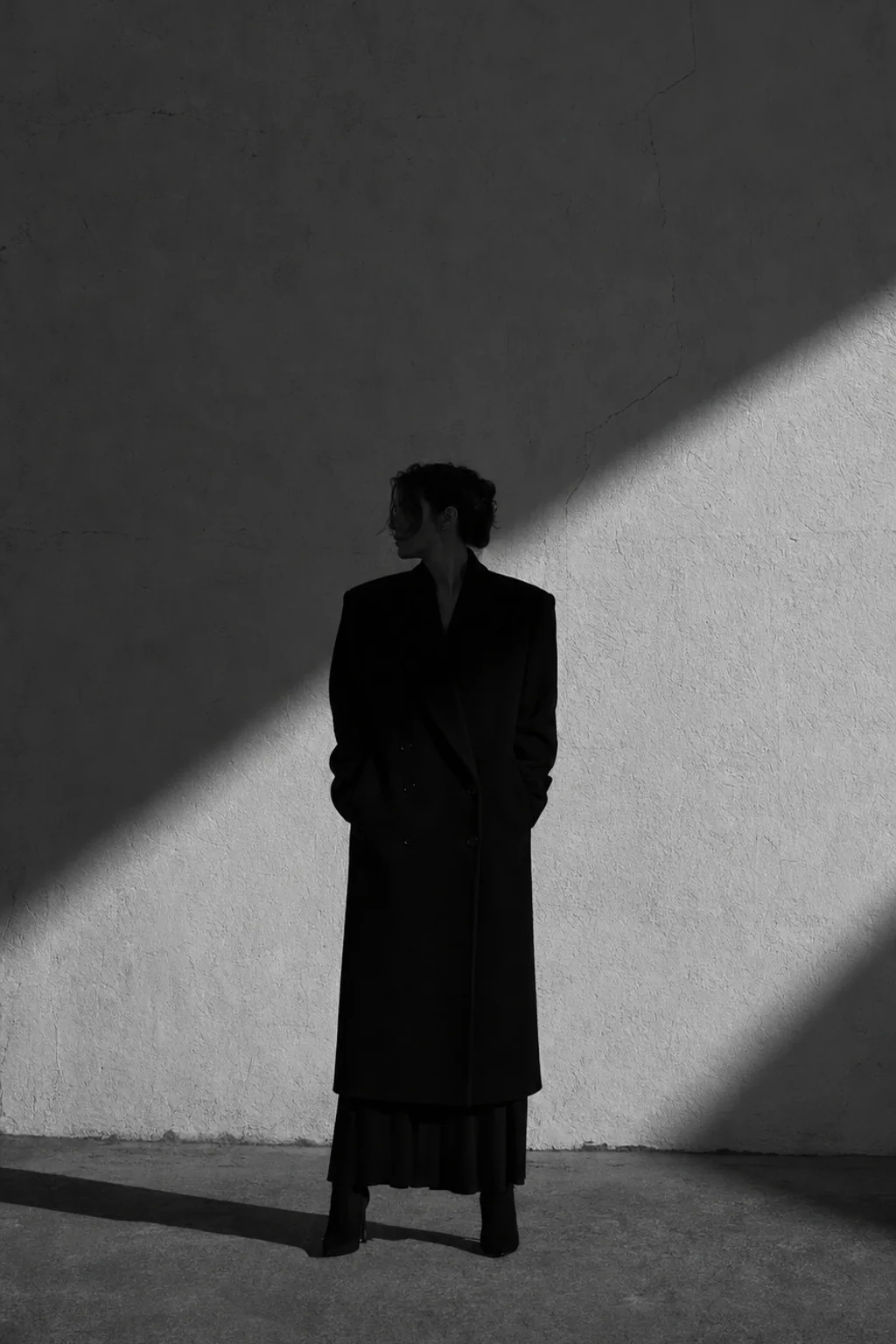
One source of light, and the rest is shadow. Almost all of HALFLIGHT’s work sits deep in black — which means the wrong setting does not merely weaken the work, it erases it.
A photographer’s site invites you to lay dark pictures on a dark ground. As a world, that is correct. But the edge of the work dissolves into the background. The second question was the film. Eight seconds is not decoration; it carries the same weight as a still. Yet on most sites the moving image is spread underneath as wallpaper, and the frame is cut away with it. Do not erase, do not crop. Those two conditions became the starting point.
Measure first, then decide — never by preference alone. Every decision made here is kept as a record.
-
We moved the ground from black to paper.
Measured, roughly eighty percent of each image sits at near-black. On a dark ground that eighty percent is exactly as dark as the page — the photograph has no outline at all. On a warm paper ground the same picture regains its edge and stands as an object on a page. The standard we judge against is the printed page, and the page is paper.
-
The film stands as a column. It is never cropped.
Stretch a vertical film to full width and the sides are cut away — the frame dies. So the height is fixed first and the width follows the ratio. The moving image is not spread beneath the page; it stands in it.
-
Sound only after someone asks for it.
A site that makes noise the moment it opens has broken its own silence. Sound is a choice the visitor makes. And when a device refuses playback, the page does not fail quietly — it offers a play control instead of a black rectangle.
-
Motion only. We never touch opacity.
Fading work in on scroll is beautiful, but in some environments a plate that is already on screen stays transparent. In a portfolio, work that cannot be seen is the worst possible failure, so the animation was reduced to movement alone. At worst something shifts a little; disappearing became structurally impossible.
-
Three rooms, never an even grid.
Poured into one uniform grid, photographs become components of a list. Sculpted pure black, a deep green window, one diagonal on a white wall — the work is divided into three rooms by the origin of its light, and inside each room rhythm is made from scale and empty space.
Nothing stands
in front of the work.
What was left out decides how the work is seen. When photographs are the product, anything that reaches the eye before them was refused on purpose.
A full-bleed hero videoStretch a vertical frame across the screen and it will be cut. Impact bought by removing part of the work is not a trade worth making.Type laid over the photographsThe moment a line of copy asks to be read inside the frame, the photograph becomes a background. Words belong beside the image, held by empty space.A contact formThis clientele moves by a single email, not by filling in fields. As an entrance to the work, a form is the longer way round.Price lists, testimonials, urgent buttonsA photographer’s standing is decided as far as possible from comparison and persuasion. Not worth the silence it would cost.
It opens onto warm paper, with black photographs set down one by one as objects. To the left the eight-second film stands like a column, and press once for sound — only there does time begin. Nothing vanishes as you scroll; you walk through three rooms, and the origin of the light changes quietly around you.
The site is never seen before the work. That was the achievement here.
Note: traffic figures and similar metrics are not placed in this column. That dark work never lost its edge, and that the moving image stood with the same weight as a still — those two points are what we count as the achievement. HALFLIGHT is a concept site planned and produced by KHZ ART; its stills and film were created with generative tools.