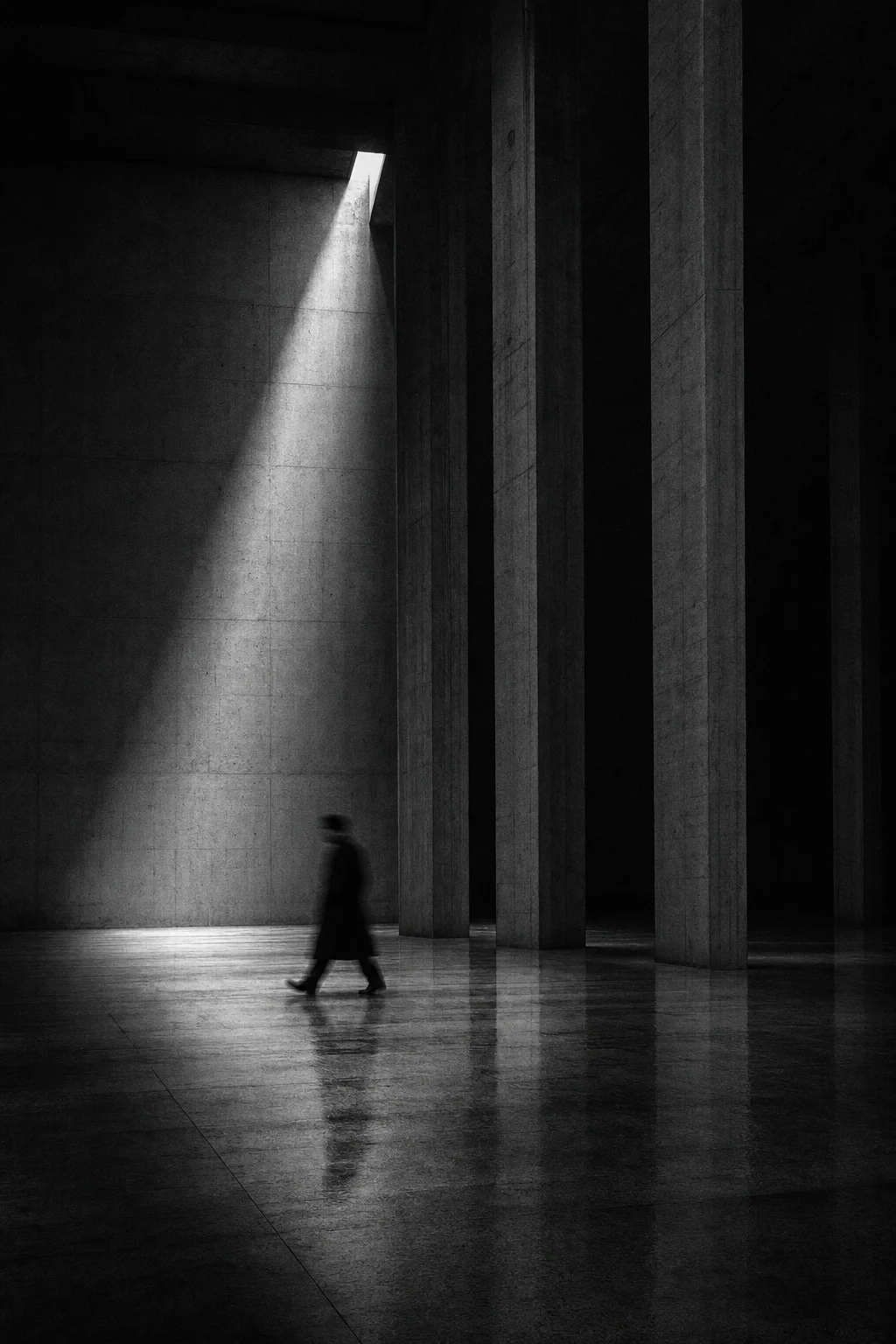
Noah
Veil
What he watches is what disappears. Installation, photography, generative video, sculpture — we set a body of work spanning media as one continuous darkness.
Bind disparate media in a single darkness.
Installation, photography, generative video, sculpture — years of work, each at its own speed and texture. "I am interested in what disappears." That single line ran through all of it.
What was asked for was not a portfolio that tiles the work into a grid. Homogenise each medium into equal thumbnails, and his work thins into a mere catalogue. To bind disparate media, without killing their texture, into one continuous experience. The key lay not in the works themselves, but in the space between them — to design the darkness not as emptiness, but as passage. That was the single thing this place was asked to carry.
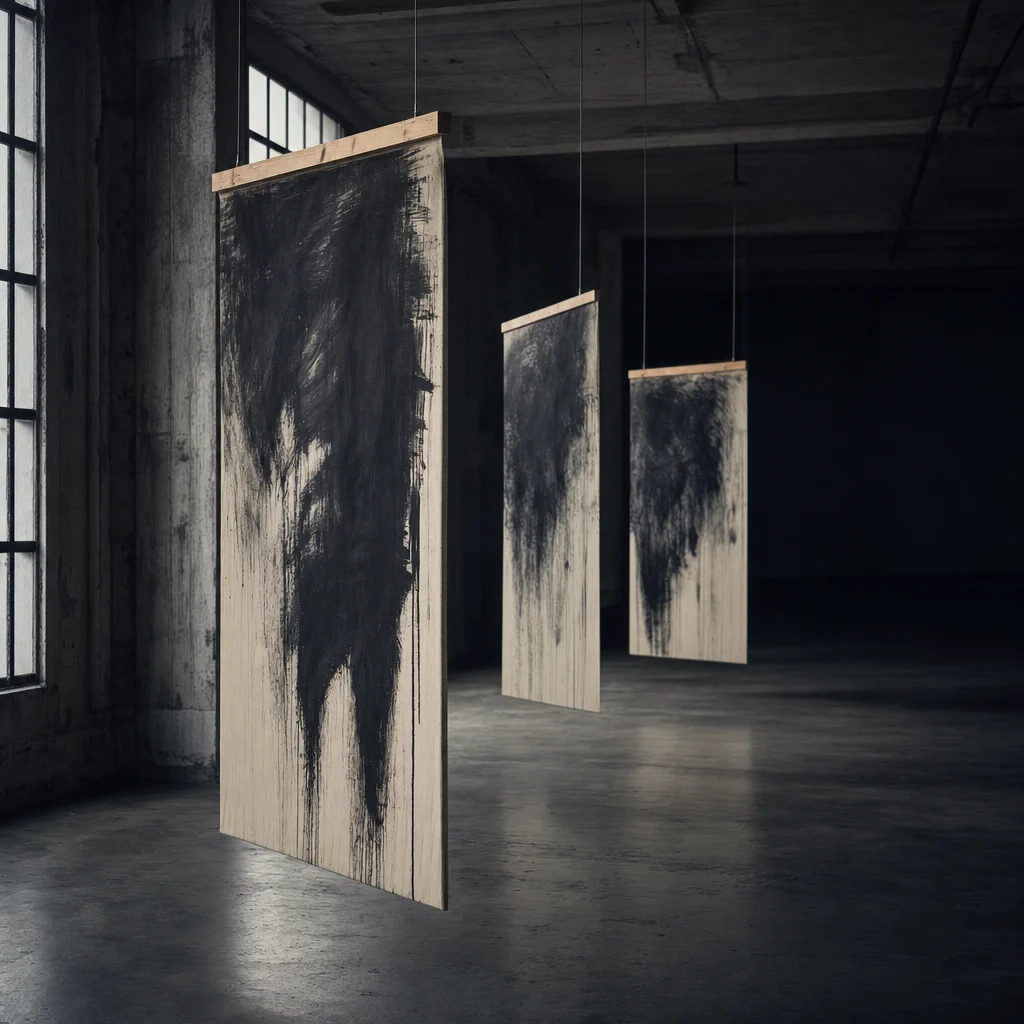
Design is not the arranging of works; it is the engineering of the time that runs between them. Here we keep, one by one, the decisions made for this place.
-
Treat the darkness between works as the work.
Not the margin around each piece, but the very dark that carries one work into the next. Black is not emptiness but a corridor to pass through. The scroll becomes a walk through an unlit gallery.
-
Sequence, don't catalogue.
We abandoned the uniform thumbnail grid and set the work as a single flow with scale and tempo. Installation, photograph and generative video surface in turn, and a rhythm forms — a cinematic sequence, not a catalogue.
-
Let each medium keep its own time.
A still installation, a moving generative video, a run of photographs — each is given its own speed and scale, never levelled into one frame. The frame follows the work; the work does not follow the frame.
-
Set the words as a threshold.
"I am interested in what disappears" — his declaration is treated not as a caption but as a threshold to pass through. The first step in the descent into the work.
Design that descends, over design that shows.
What a work leaves out decides the depth of the experience as much as what it holds. Because the subject is immersion, we deliberately let go of brightness and convenience.
A wall of dates and edition countsLine up counts and years at the front, and the work thins into a document. We raise it from darkness and texture, not from data.Autoplay on the generative videoWe do not throw motion at you the moment the page opens. We leave the time for the viewer to arrive at the film.A white-cube gallery UIThe bright white of a gallery would betray a subject of "the slow withdrawal of light." We hold the darkness to the very end.
It opens, and you stand at the mouth of an unlit gallery. With each scroll an installation, a photograph, a film rises slowly out of the dark, then returns into it. The black between works is no longer empty — it has become the corridor to the next. Unhurried, unlit — only the time of standing before what is disappearing runs on, unbroken.
That media once scattered now connect on a single breath. That was the achievement of this work.
Figures such as traffic or inquiries are not placed in this column. That the immersion never broke, even across media — that single point is what we consider the achievement of this work.