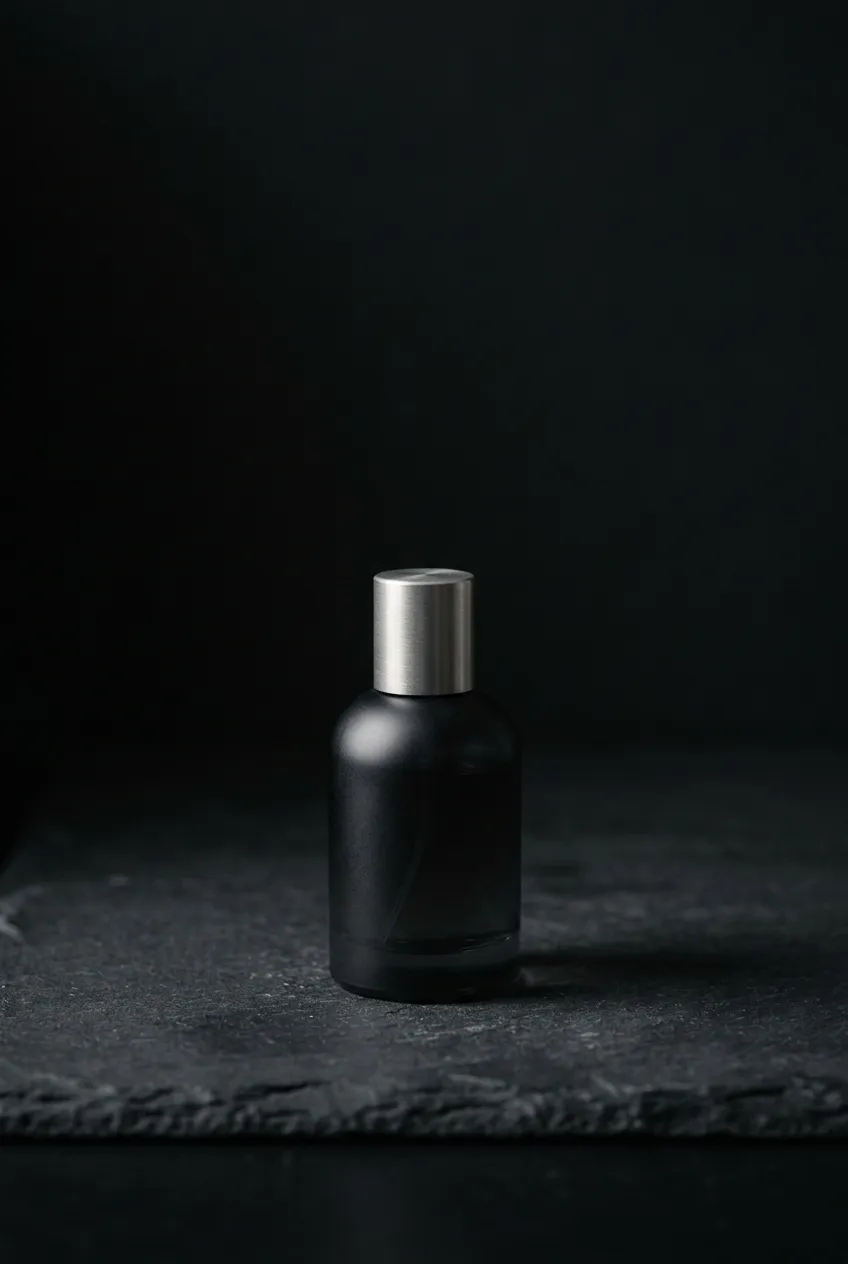
Yoin
余韻
Fragrance is the outline of a memory, one instant before it fades. We translated the wordless language of smell into the visual — as the time of an afterglow that remains after the scent is gone.
Design what remains after it is gone.
"Fragrance is the outline of a memory, one instant before it fades." Sandalwood and fog, a garden after rain, burnt paper, midnight sand — what the four scents point to is not the moment of smelling, but the afterglow that remains once it is gone.
What was asked for was not a fragrance shop that lines up bottles. To translate the wordless language of smell into visual stillness. And to design not the scent itself, but the time after the scent has gone — the afterglow. Smoke, fog, a damp surface. With abstraction alone, never resolving into an image, to call up the memory that touches the back of the nose. That was the single thing this place was asked to carry.
Design is not the showing of a product; it is the engineering of the time that remains after a scent is gone. Here we keep, one by one, the decisions made for this place.
-
Show the afterglow, not the product.
The bottle and package are not the protagonist. The air that remains once a scent is gone — smoke, fog, damp — is set as abstraction that never resolves into an image. Olfactory memory is called up through visual negative space.
-
Translate smell into stillness.
We do not fill a wordless experience with lively explanation. Deep black, and stopped time. The whole screen is lowered to the speed of "feeling" rather than reading.
-
Give each of the four scents its own silence.
Sandalwood and fog, a garden after rain, burnt paper, midnight sand — not levelled into a list, but each given its own interval and negative space. Each becomes the entrance to a different memory.
-
Leave the words as an afterglow.
The scent names, in Japanese and English, are set not as explanation but as afterglow. Composed quietly, so that once you finish reading, only the afterimage of the scent remains.
Design that lingers, over design that fills.
What a work leaves out decides the depth of its afterglow. Because the subject is disappearance, we deliberately let go of clamour and explanation.
A catalogue of bottlesLine up the products, and the scent thins into a "thing." We make the afterglow — the time after it is gone — the protagonist.Lists of notes and benefitsThe more you explain in words, the further olfactory memory recedes. Not data, but abstraction and negative space, felt.Bright lifestyle photographyThe clamour of daily life betrays the stillness of an afterglow. With the abstraction of smoke and fog alone, we hold the deep black.
It opens, and you stand in the air after a scent is gone. With each scroll smoke, fog, a damp surface surface without resolving into an image, then return into the black. No bottle, no list of benefits — only the afterglow of a remembered scent, drifting in the depth of the screen. Neither loud nor explanatory: the afterglow a scent leaves has become the afterglow of the place itself.
That scent and screen leave an afterglow at the same stillness. That was the achievement of this work.
Figures such as traffic or inquiries are not placed in this column. That the wordless language of smell could be translated, fully, into visual stillness — that single point is what we consider the achievement of this work.