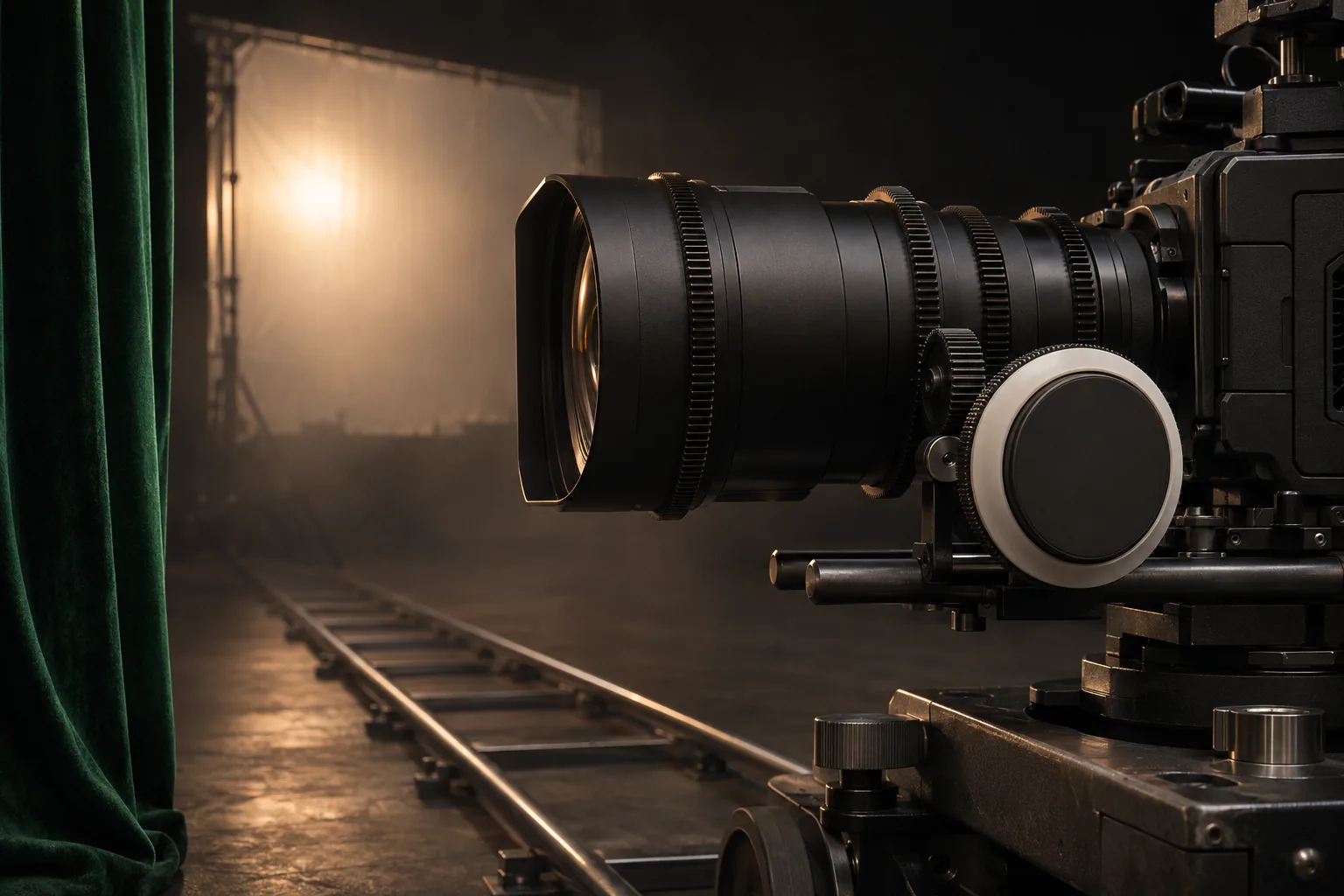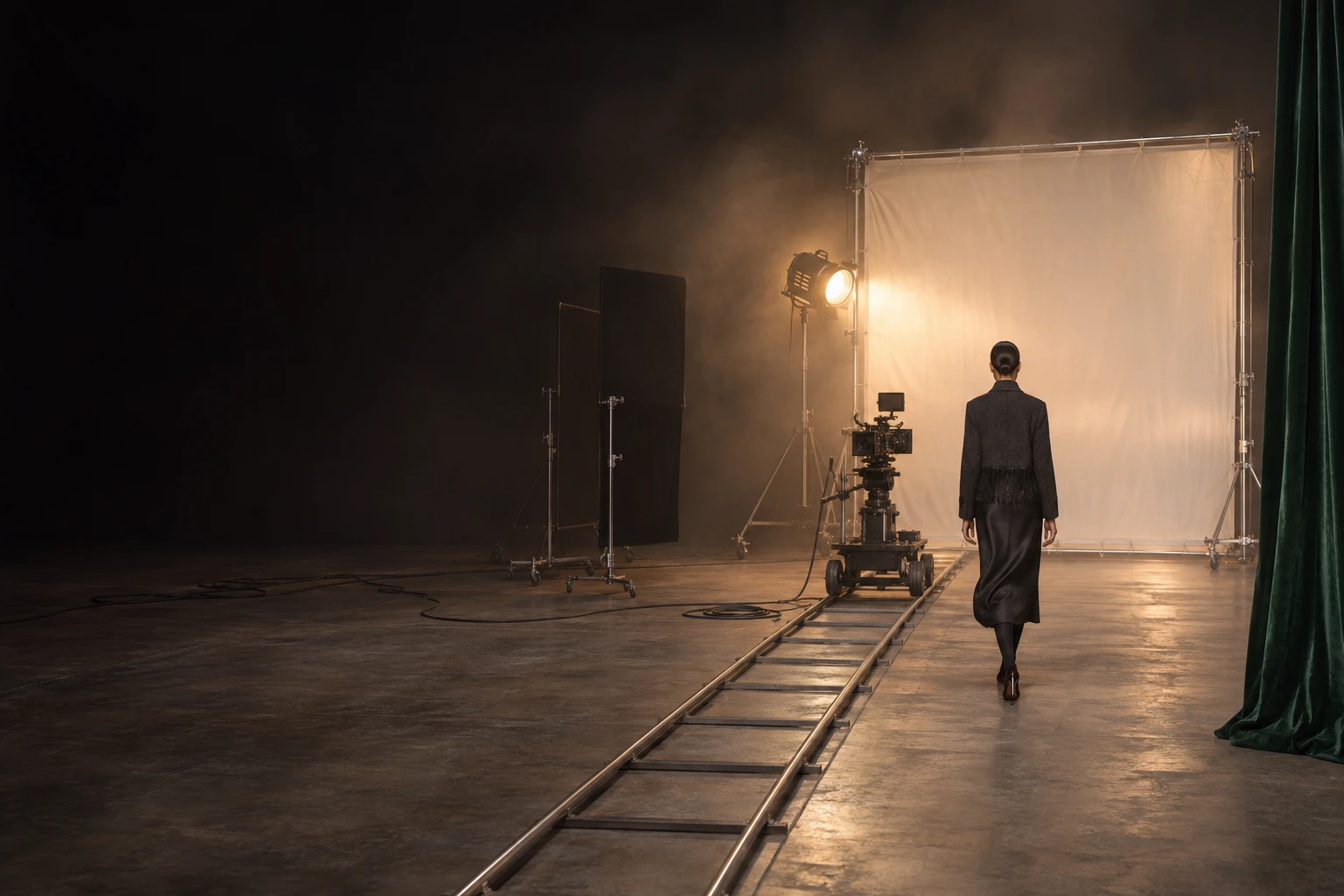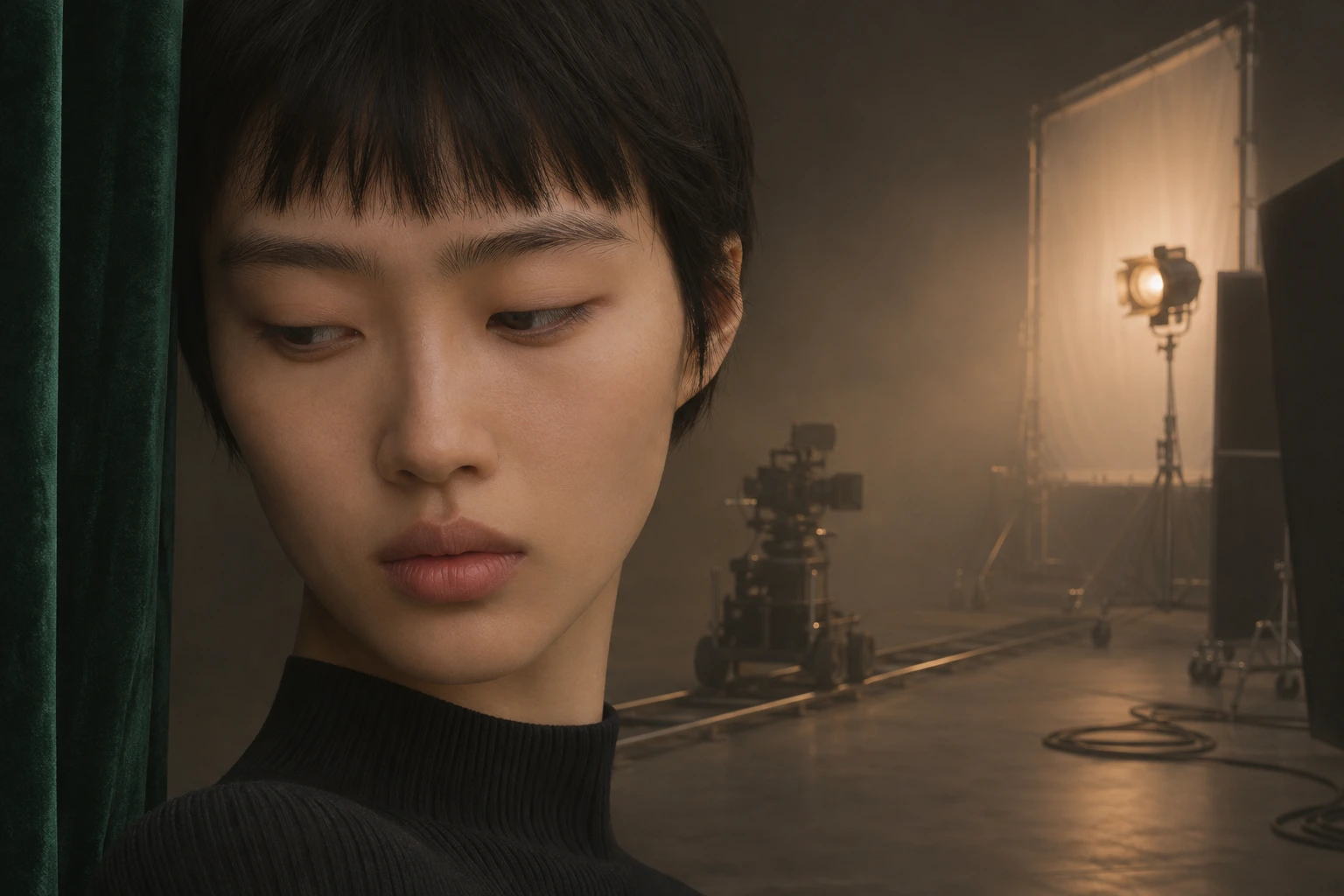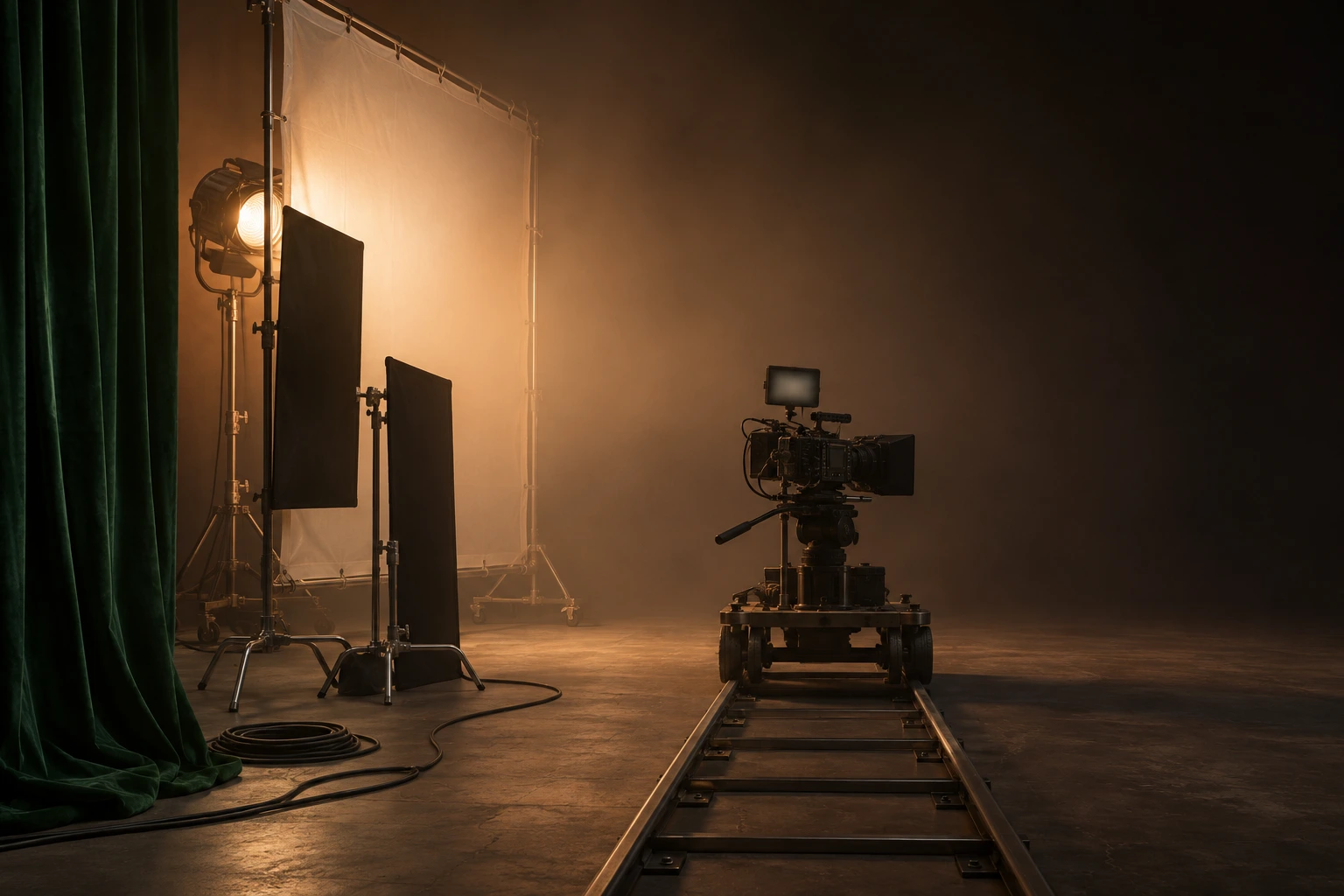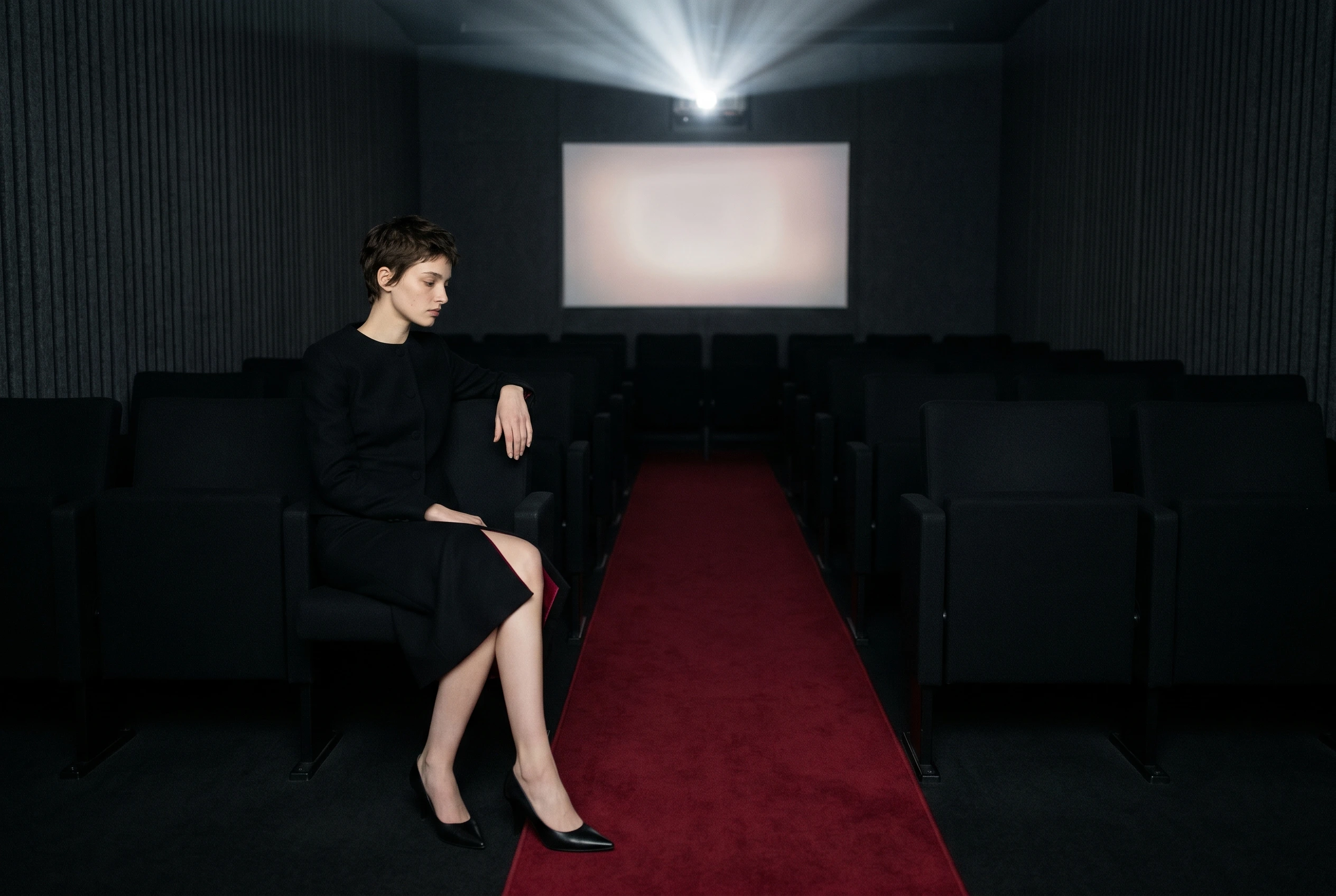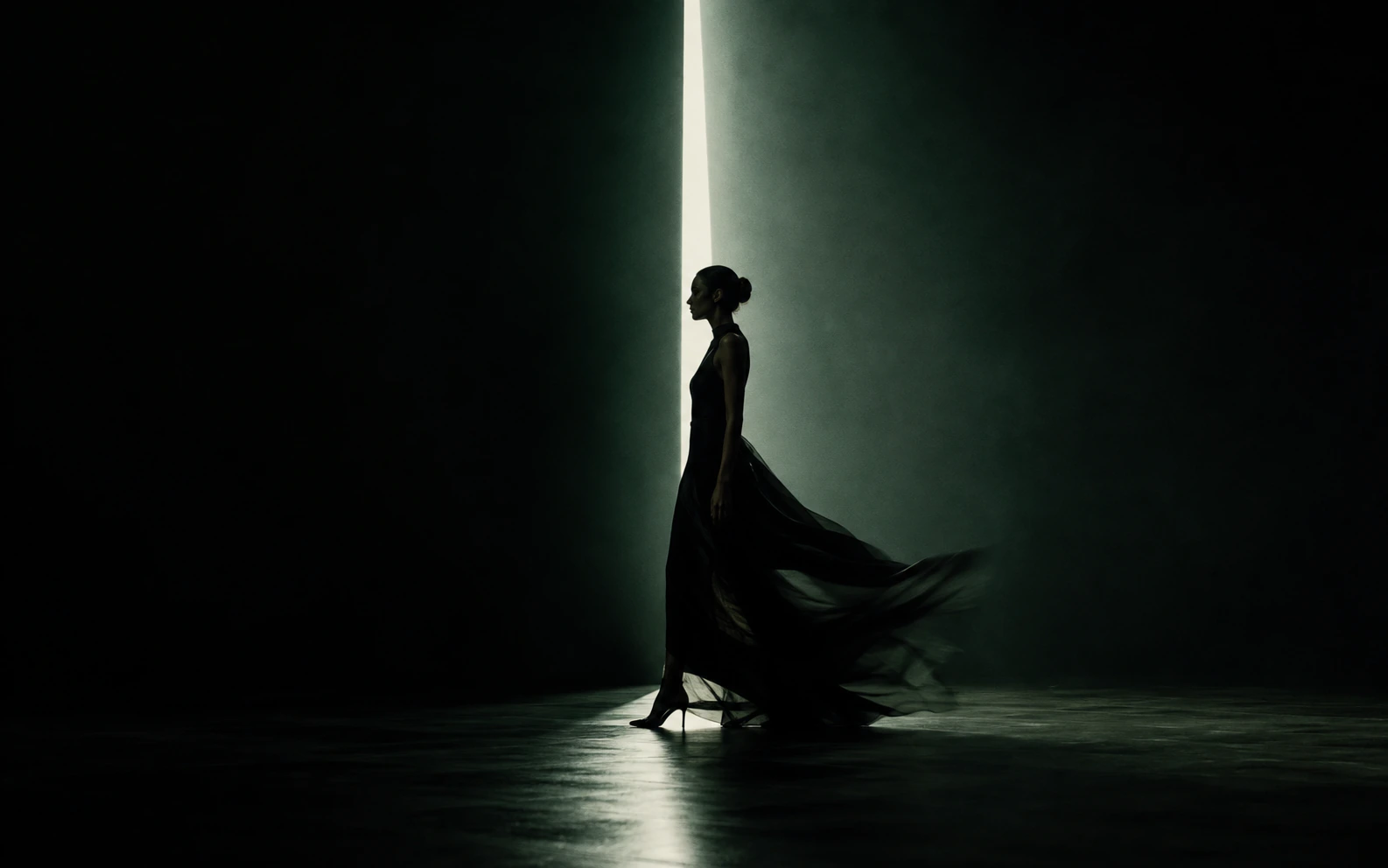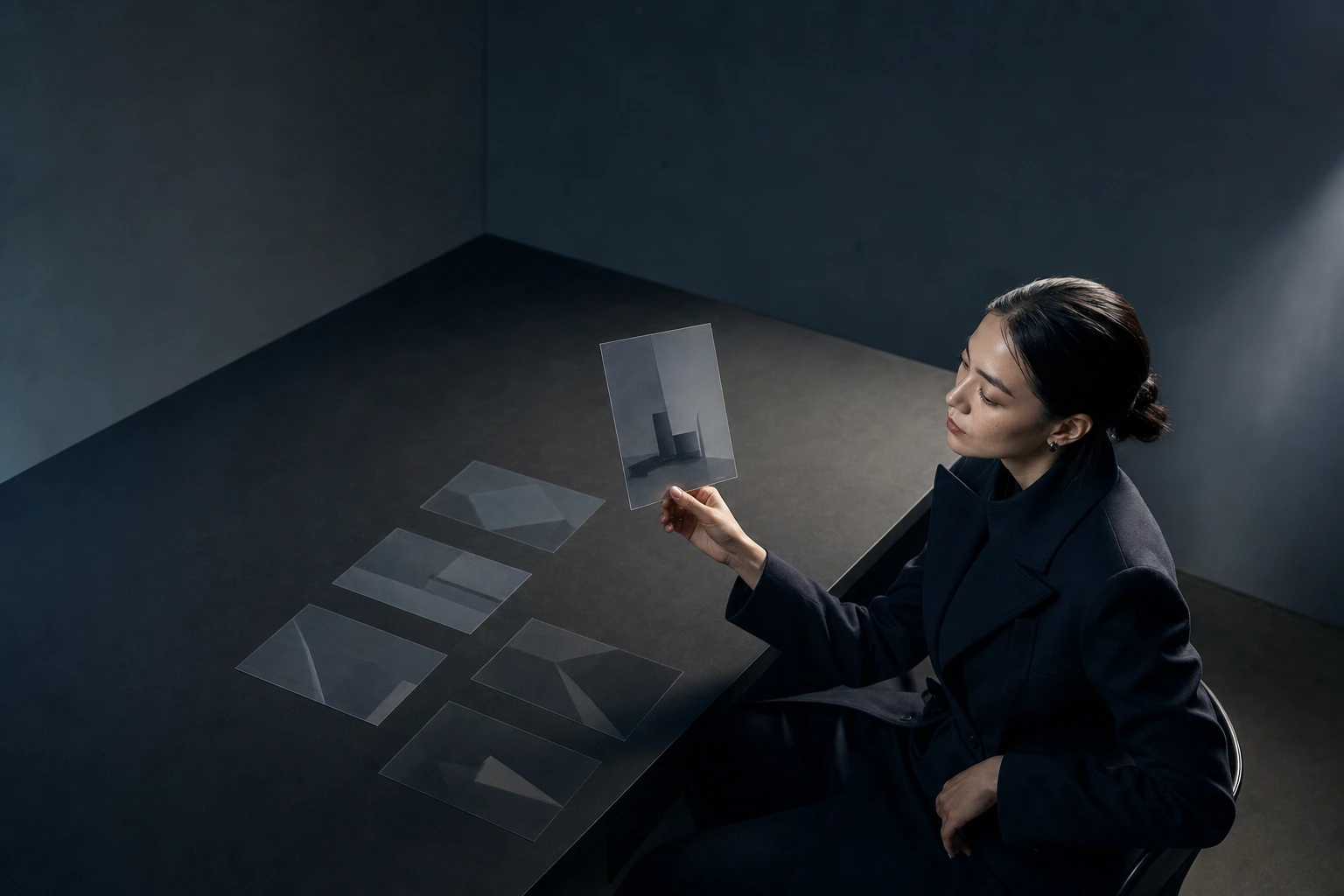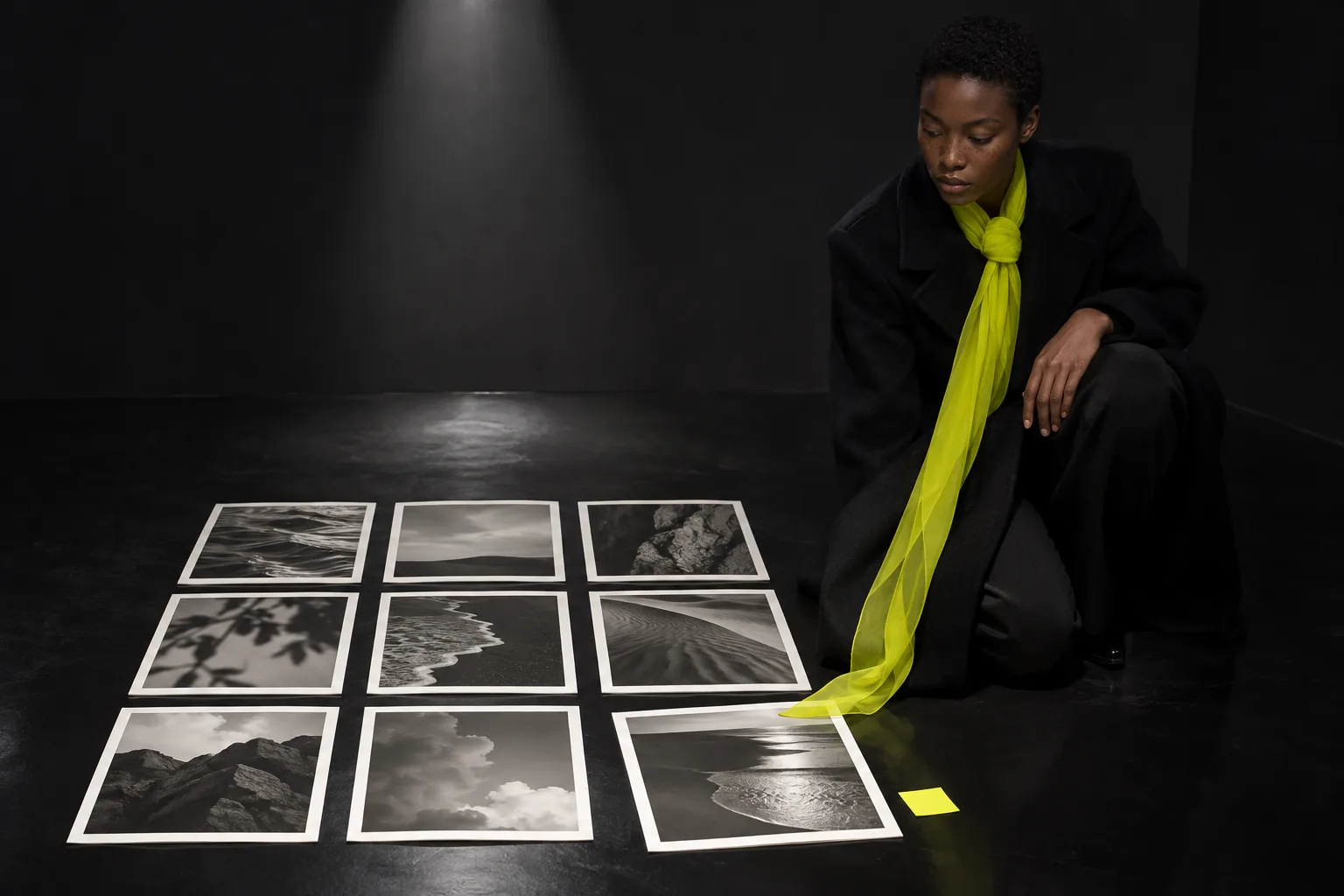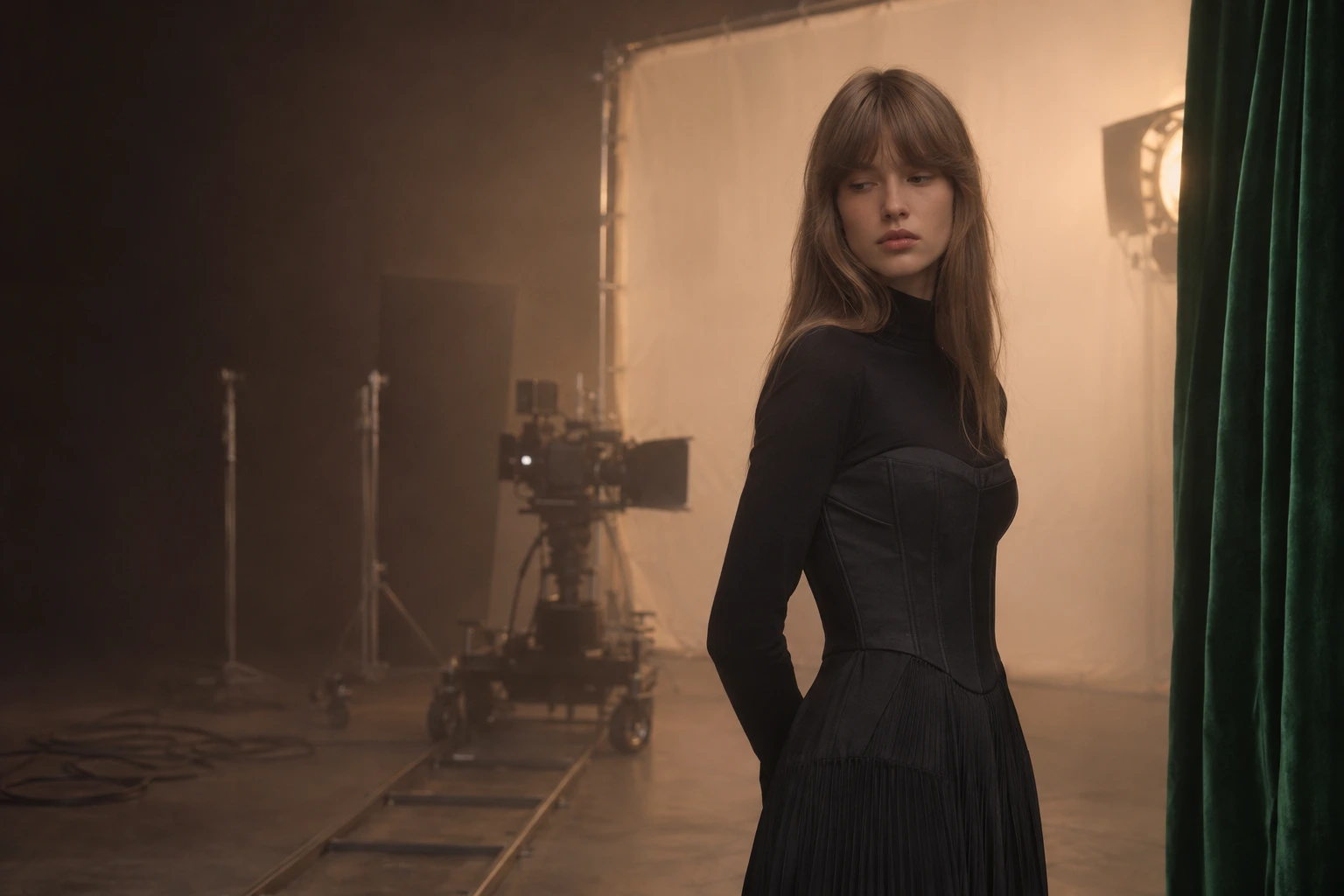
A model stands on a strip of tape on the floor of a studio at night. Light passes through a huge white silk behind her, and a thin haze turns into a glowing wall. The camera only creeps forward on its track. Nobody says a word. Yet what stays after the take is the weight of the clothes and the temperature of the room.
That is the work of a brand film. Not what to say, but what to leave unsaid. Every part that would become an advert the moment it is put into words is handed to image and sound instead.
This piece explains what a brand film is: how it differs from similar formats, five conditions that make one, the right length for each use, and what to decide before you shoot.
What does a brand film actually leave behind?
A brand film leaves an impression, not information. No price, no features, no campaign dates. Three days later, what a viewer recalls is a colour, a sound, the way someone walked — often before the brand name itself.
For a fashion label, what you want to leave is the feel: is this cloth cold or warm, are these people hurrying or waiting? Once that lands, the eye that reads the product page changes. Product copy works better when it is read after the film.
A brand film comes before the sale. It leaves one reason to remember, not a reason to buy.