Journal

A Fashion Brand Film Should Survive the Pause Button: Is the Garment in the Frozen Frame?

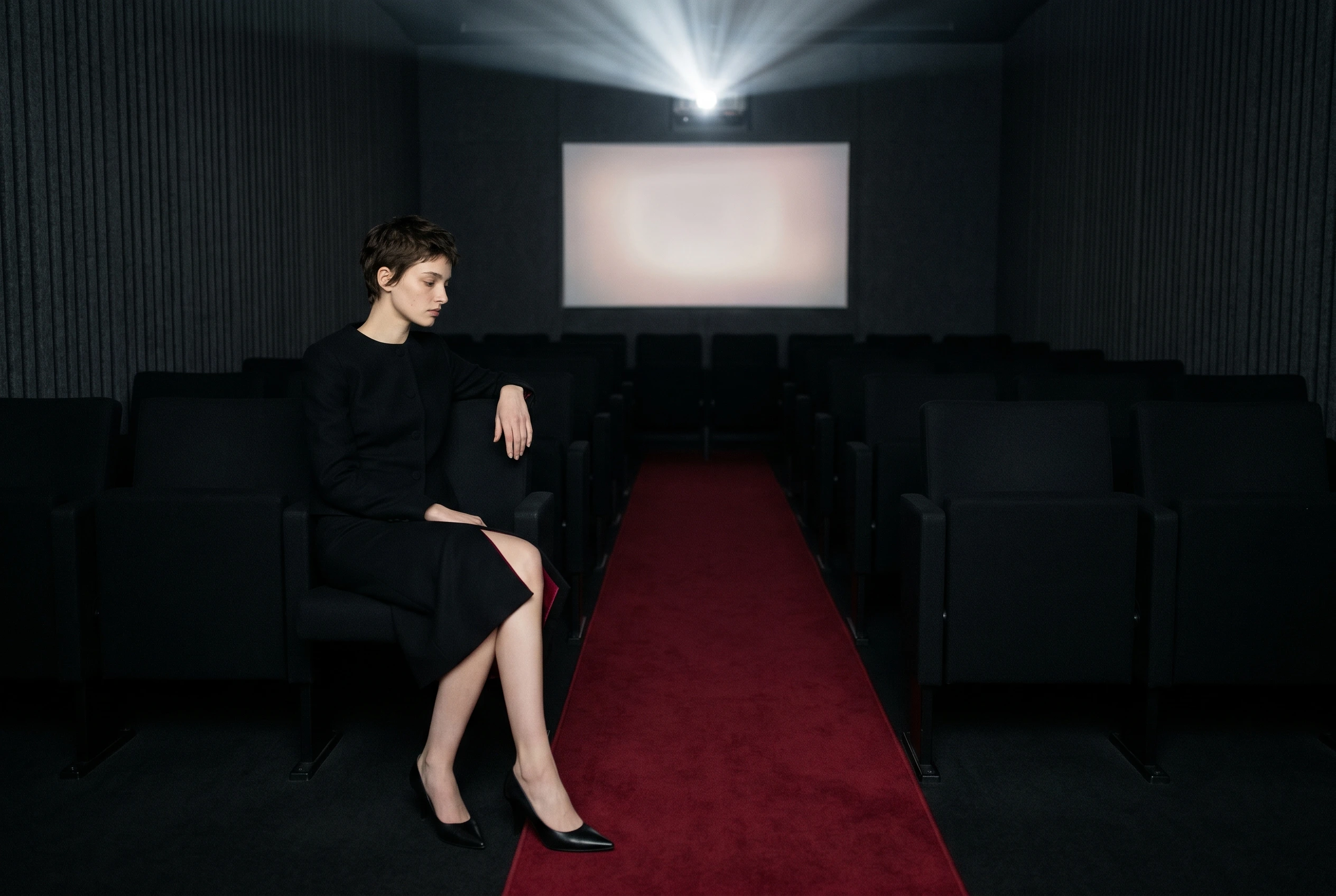
A screening room for a fashion brand film: a woman in a black jacket and skirt sits by the aisle under the projector beam, facing the screen

A fashion brand film tells you more when you stop it than when you let it run. Press pause three times, anywhere. If the frozen frame still shows the cloth, the outline and the colour, the film is doing its work for the clothes. If it does not, what is playing is only atmosphere.

Picture a small screening room. The finished thirty seconds play, the music ends, and everyone in the row nods. Then ask for one more run, this time stopping three times along the way.

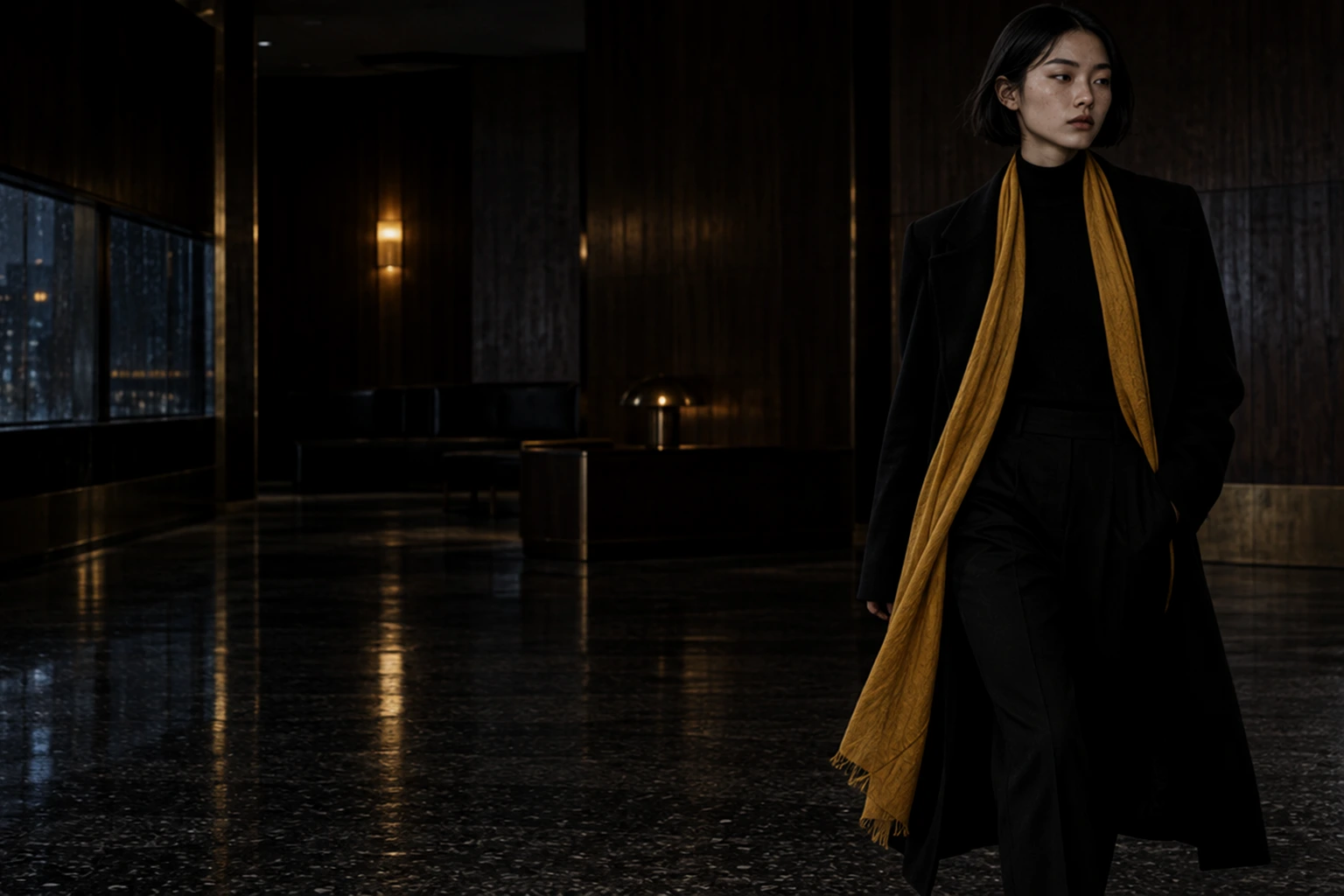
The first pause lands on a sleeve smeared into motion, its outline gone. The second, on a black coat that has merged with the shadow behind it. The third, on a close-up of a face. In none of the three can you tell what the person is wearing. Nobody noticed while the film was moving.

This piece sets out the pause test for an apparel brand film, the four things to read in a frozen frame, and what to decide before the camera comes out.

How Is a Fashion Brand Film Different From a Product Video?

A product video explains one garment: its length, its cloth, how it falls, what it goes with. The viewer is already deciding whether to buy.

A brand film sits one step earlier. Who wears these clothes, where, and at what hour of the day. It exists so the label is remembered, not so one piece is explained.

A different purpose, though, is no licence to hide the clothes. Unlike a film for a fragrance or a drink, in fashion the product itself moves through the frame on a body. The further you lean into mood, the more the garment dissolves into movement and shadow.

A brand film is not atmosphere on a loop. It is time spent in the clothes, recorded so it still reads when you stop it.
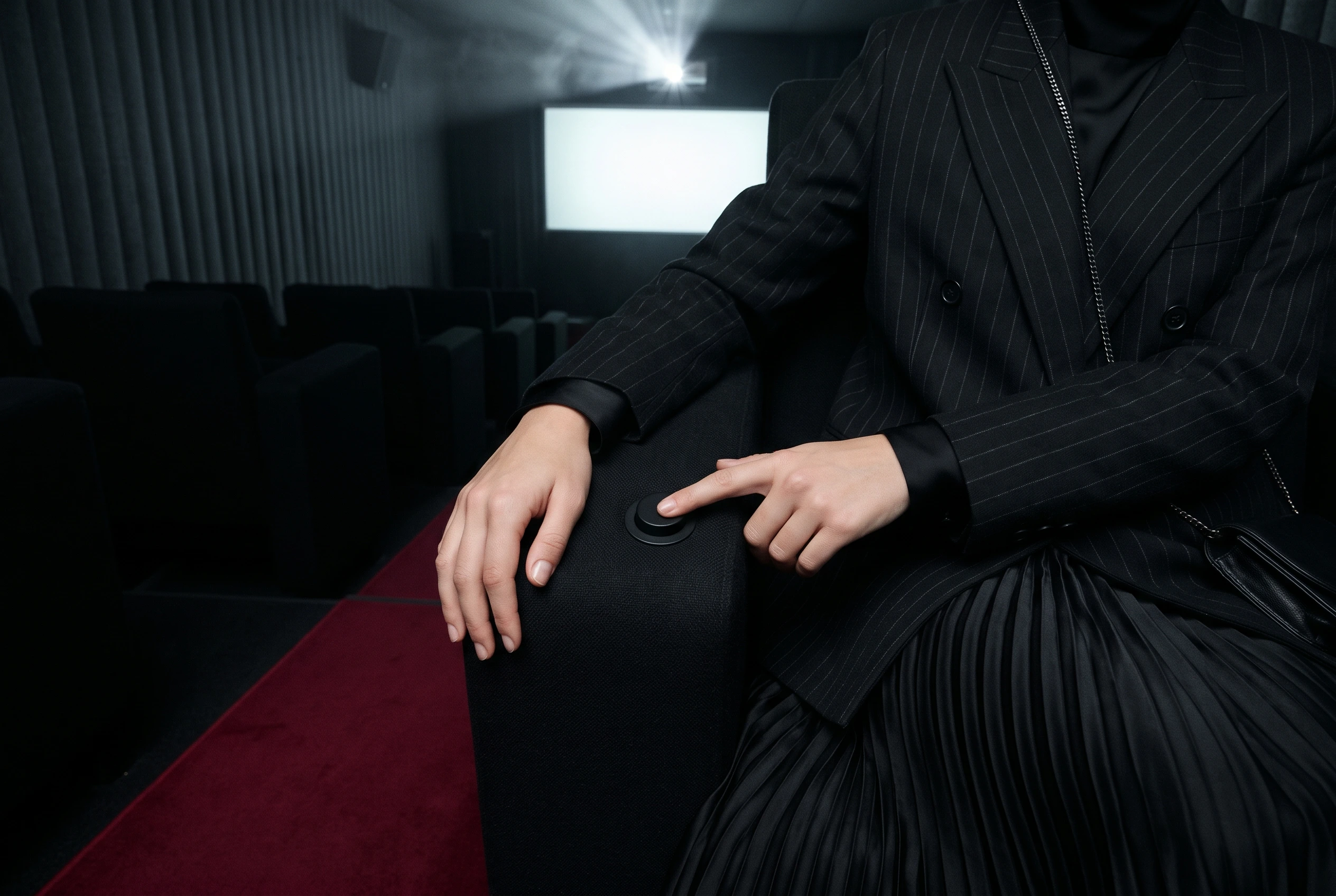
A hand pausing an apparel brand film: an index finger pressing a black dial on the armrest

The Pause Test: Stop It Three Times, Anywhere

There is only one method. Mute the sound, look away, and stop the film three times: near the start, around the middle, towards the end. The point is not to aim. Save the three frozen frames as images and lay them side by side.

Then put the same question to each one. Could this frame hang at the entrance of the shop, exactly as it is?

A film is seen standing still more often than we assume. On social feeds, a single frame sits in the grid before anything plays. On a shop page, a phone that refuses autoplay shows the first frame as a photograph. Someone who is interested will pause, save the screen, and come back to it later.

What the film feels like in motion, and what is left when it stops. Three frames tell you whether the two agree.

Alone, you will stop on the good moments without meaning to. If you can, hand the remote to someone who did not make the film. The three frames chosen by a person with no favourite moments are the closest you will get to a first-time viewer.

Four Things to Read in a Frozen Frame: Cloth, Outline, Colour, Blur

With three frames in a row, there are four things to look for.

First, cloth. Can you read the weave or the knit, the sheen of the surface? In dark scenes, black clothes tend to join the shadow and become one flat shape. Look for steps of tone still alive inside the black.

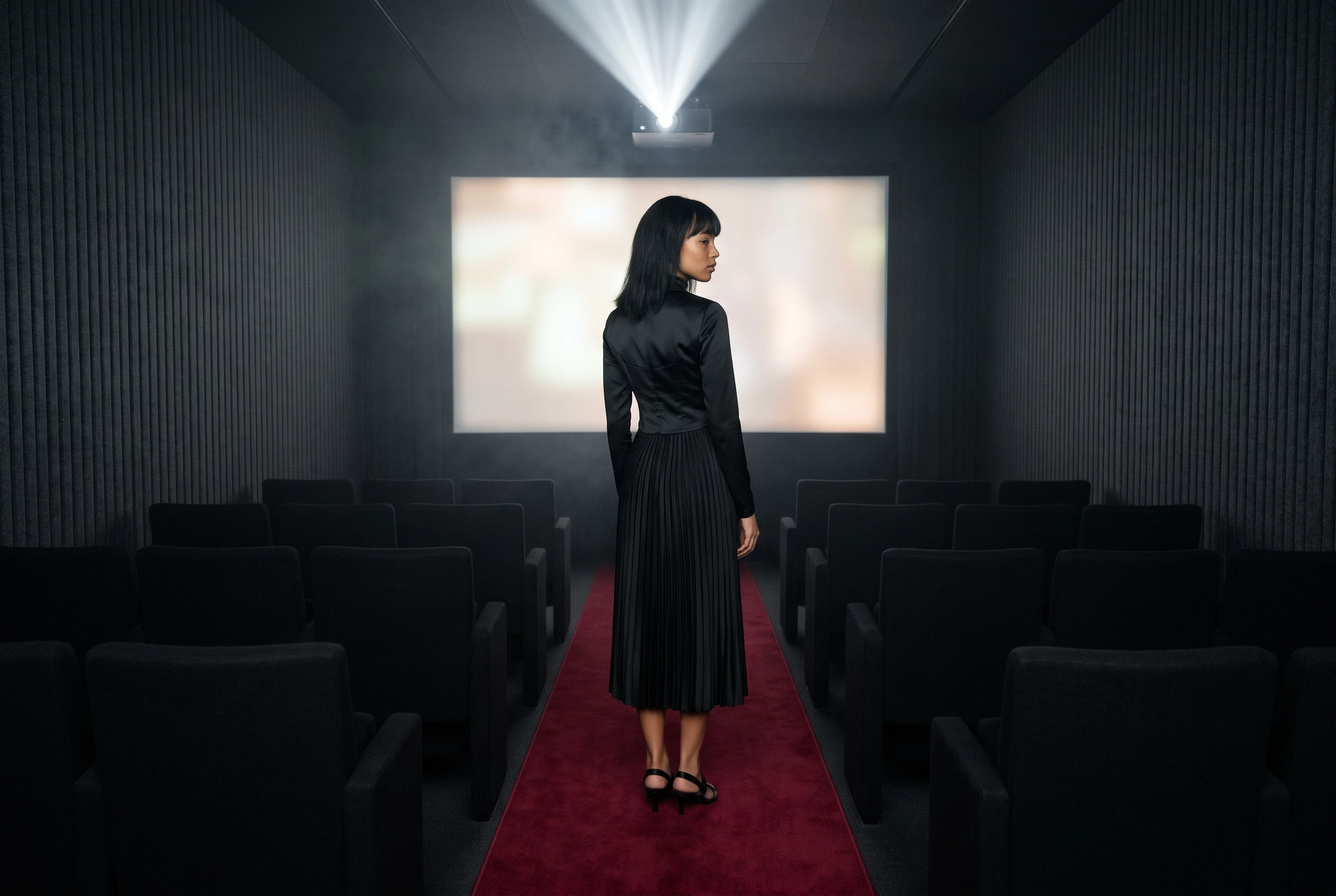
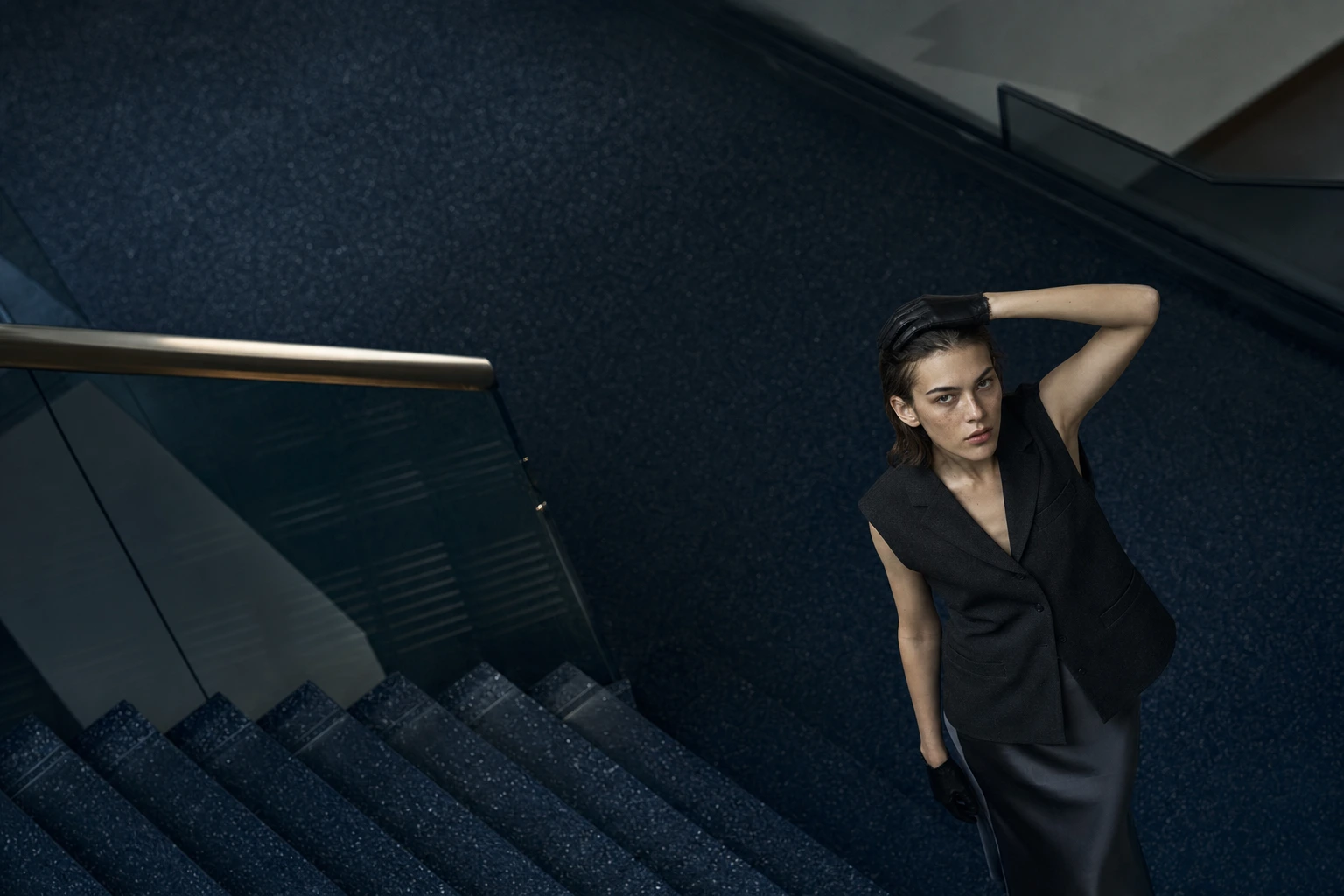
Second, outline. Is there at least one frame of the three in which the garment runs from shoulder to hem? A run of faces and hands can be beautiful and still leave no memory of what the clothes were.

Third, colour. Does it match what a customer will hold in the shop? Pushing a whole film towards blue or amber builds an air, and quietly turns the garment into a different colour. When the piece that arrives does not look like the film, the result is a small disappointment.

Fourth, blur. Stop in a fast passage and the fabric streaks until its shape is lost. You do not need to remove the movement. One beat inside the shot where the movement eases is enough.

If the garment cannot be read in any of the three frames, those thirty seconds are not yet a film about clothes.
A woman standing alone on the red aisle of a screening room, her garment visible from shoulder to hem

The Cooler a Brand Film Looks, the Less the Clothes May Show

Quick cuts, hard backlight, smoke, deep shadow. Every tool that makes a film look cool also pushes the garment towards being unreadable. The people who made it watch it in motion, so this is the hardest place to notice.

You do not have to give up the cool. The corrections are small. With backlight, return one weak light from the front. In a dark scene, keep the steps of the cloth inside the black. Among quick cuts, place one shot in which the full garment holds still for a single beat.

Let the movement carry the mood, and let the still beat carry the clothes. One film can hold both.

Music does the same job. Cut on the strong beats, and set the readable moment where the sound pulls back. Viewers look hardest at what is in the frame at the instant the sound eases.

When You Study Brand Film Examples, Count the Slow Beats, Not the Seconds

Look for examples and the first temptation is to copy the running time. Fifteen seconds, thirty, sixty. But length is not what you should carry home from a reference.

Count how many times the movement eases within one film, and note which part of the garment is in frame when it does. Try the same three pauses on a film from a label you admire. The films you have remembered longest are likely the ones whose paused frames stand up as photographs.

Count with the sound off. With music on, the pleasure of cuts landing on the beat pulls your attention away from whether the garment is holding still. On paper, write only the second at which the movement eased and the part of the garment that was in frame.

Counting also sets a limit. Thirty seconds has room for three, perhaps four, beats in which a garment can truly be read. You may want to show ten looks; one film can make a viewer read only a few of them. Which ones is a choice to make first.

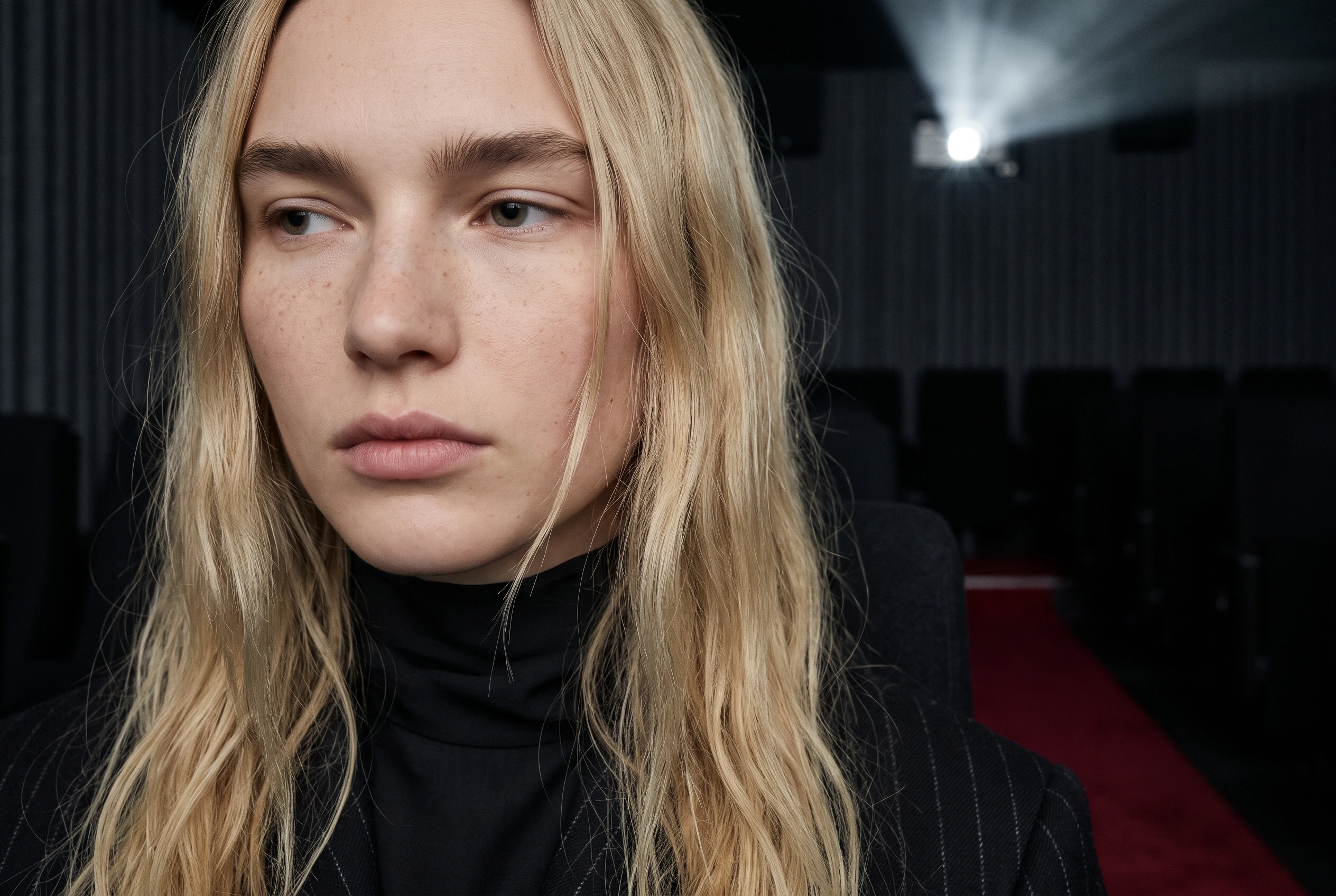
A close-up of a face turned toward the screen, the collar of a pinstripe jacket in frame

Where an Apparel Video Plays Decides Where It Stands Still

The same film stops on a different frame depending on where it lives.

On an online shop or a website, it is the first frame. It appears as a photograph in the instant before playback and on every device that blocks autoplay. Put a frame with the full garment there.

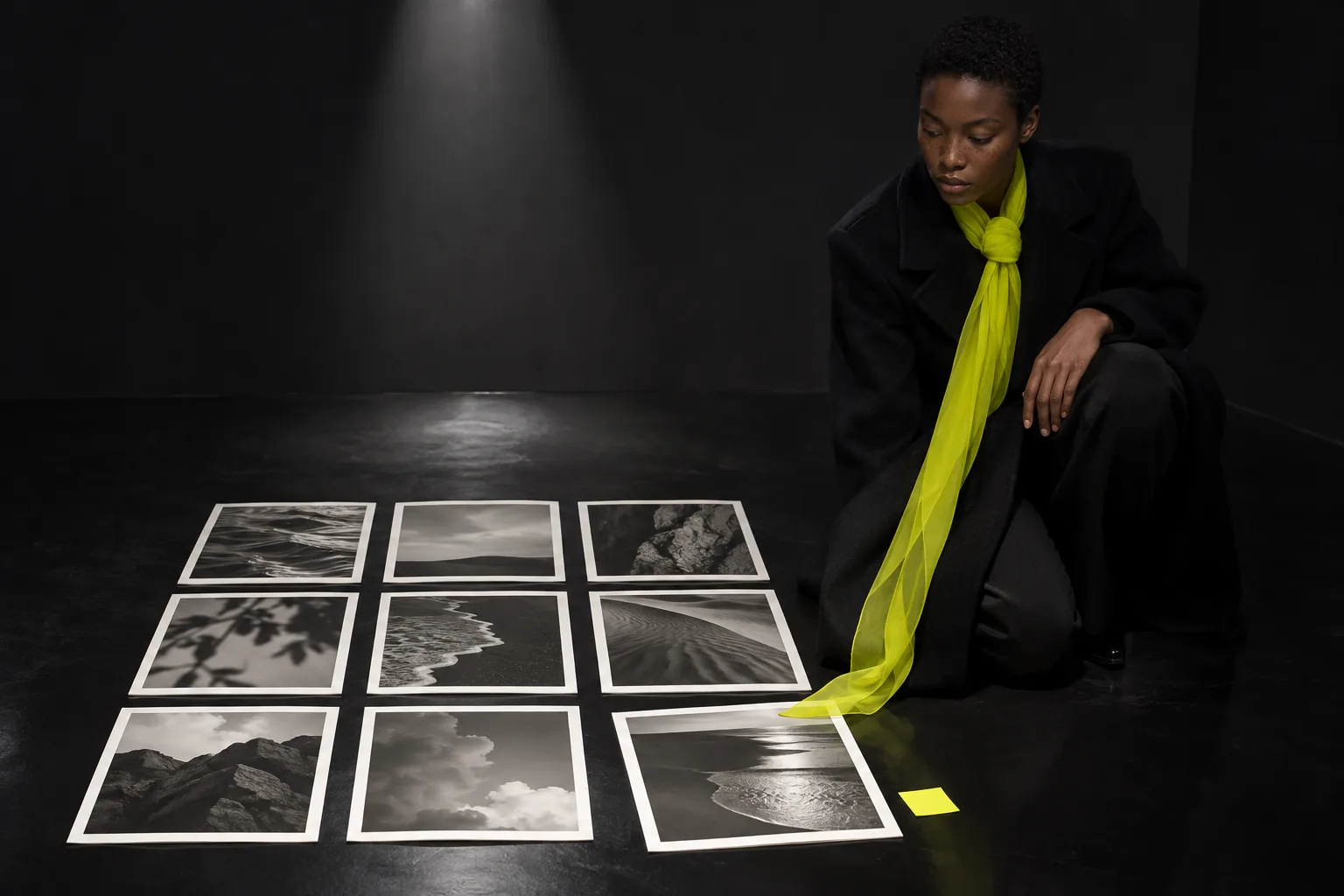
On a vertical social screen, it is the cover frame in the grid, and in most cases you may choose it. Choose the frame where the garment reads best, not the one with the most movement.

On a screen in the shop, it is the two or three seconds a passer-by gives it. There is no sound and no control over where they begin. Tighten the spacing of the slow beats so that any two seconds contain the clothes.

Films built from the placement outwards are what we take on as brand film production.

Three Decisions Before the Shoot: Draw the Frames You Want to Stop On

The pause test checks a finished film, but it works hardest before the shoot.

One. Decide three frames you want people to stop on, in pictures rather than words. This garment, this angle, this light. Choose them as if you were choosing three photographs before any storyboard exists.

Two. Build the movement towards those three. Someone enters, the motion eases, they leave. Each chosen frame sits on the eased beat of its own shot.

Three. Set colour from the real garment. Keep a swatch of the cloth on set and hold it against the graded picture. The colour of the air is decided only within the range that leaves the garment's colour intact.

Do not make the film and then hunt for a good frame. Decide the good frame first, and move towards it.
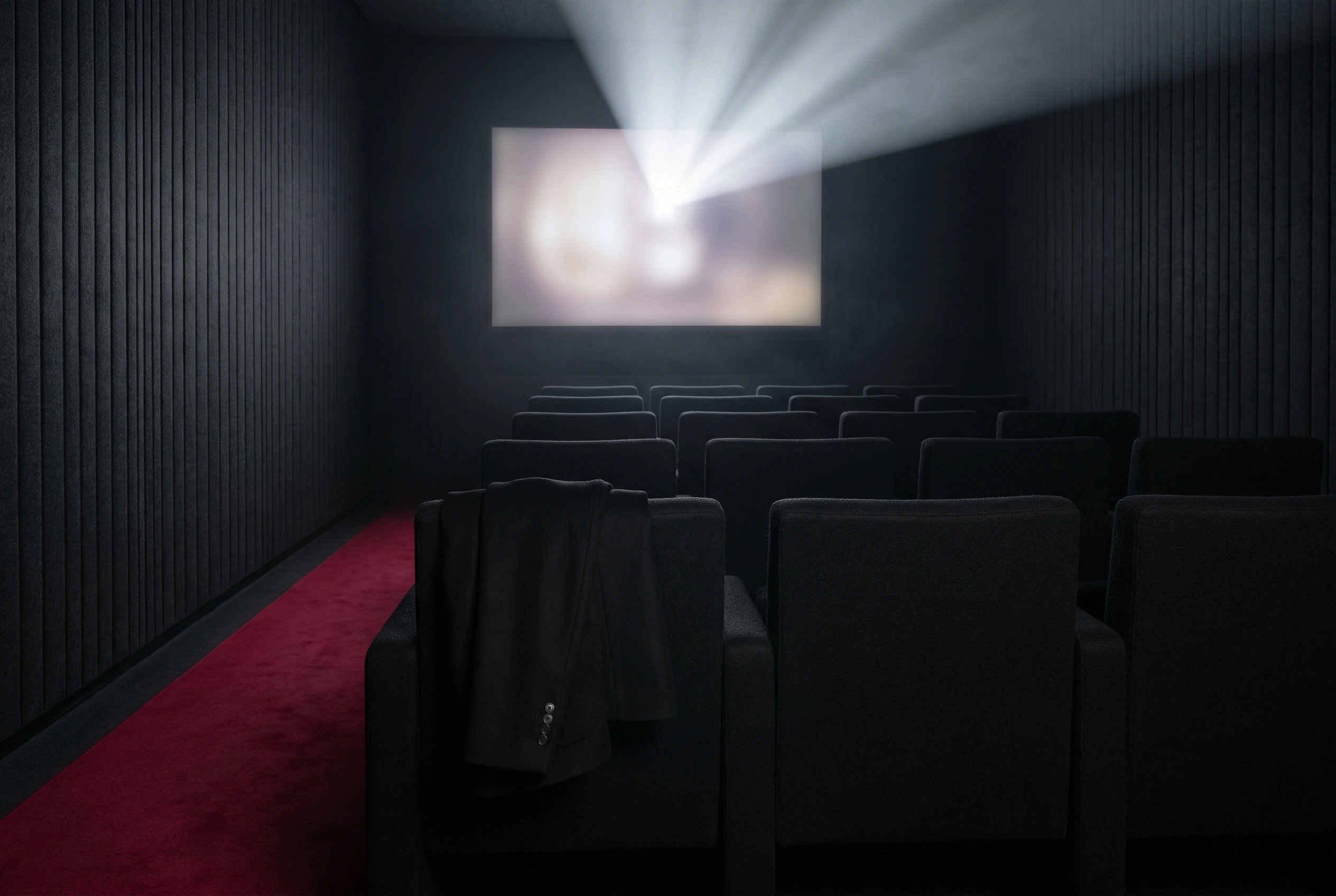
A black jacket folded over a seat-back in an empty screening room, under the projector beam

If All Three Frames Read as Clothes

There is not much to check. Mute it, stop it three times. Cloth, outline, colour, blur. If the garment reads in all three, the film does the same work whether it is running or standing still.

If you are about to make one, begin by choosing the three frames you want to stop on. If you already have one, begin tonight, with three pauses.

Before the shoot, you can test whether a paused frame still reads. Make a few seconds of motion from a garment photo, pause it, and check that fabric and shape survive. Pollo AI makes short videos from images or text, and you can start with free credits.

Make a draft with Pollo AI (affiliate link, advertisement)

Frequently Asked Questions

How long should a fashion brand film be?

Let the placement decide. Fifteen to thirty seconds for social feeds, around thirty for the first screen of a website. Before length, check that the film holds three beats where the movement eases and the garment can be read.

Should a label make a brand film or a product video first?

If no piece has been explained anywhere yet, start with product video. When the products are understood but the label is not remembered, it is time for a brand film. In both cases the garment must still read in a paused frame.

Can a film look cool and still show the clothes clearly?

Yes. Let the movement carry the mood and let the eased beat carry the garment. With backlight, return one weak light from the front; in dark scenes, keep the steps of the cloth alive inside the black.

Read next
A brand film decides its temperature in the first second
Film Production Cost Breakdown: Start at ¥35,000 for Thirty Seconds, Then Add One Line at a Time
Instagram Consistency for Brands: Decide It in a Grid of Nine
Why Minimal Design Makes a Brand Stronger
All Articles
Brand Film

Send three paused frames. We will mark the one where the garment is lost.

Send three frozen frames from your film and we will mark cloth, outline, colour and blur on each. Those who join us on LINE receive one drawn direction for their brand. Tell us about your brand — we usually reply within 2–3 business days.

Start the Conversation